Tuesday, April 6, 2021

Godzilla vs. Kong delivers a fun Monster Mash

"Godzilla is out there hurting people and we don't know why!"

With that line from Kyle Chandler, the stakes at the start of Godzilla vs. Kong are established. After this big lizard attacks Florida, human beings everywhere are terrified. What could possibly stop this beast? If you're thinking the mighty Kong...not exactly. Dr. Nathan Lind (Alexander Skarsgard), who must always put on heavy jackets and vests to conceal the fact that he the physique of Alexander Skarsgard, has a version of the Hollow Earth theory that proposes that extremely valuable substances are in the core of the planet. If the company Apex Cybernetics can retrieve that material, they can use it to fight Godzilla. The only one who can help human beings get to the center of the Earth, though, is Kong. Using this primate as a tour guide will be difficult, though, since he and Godzilla are in constant war with one another.

Godzilla vs. Kong is made in the mold of G.I. Joe: The Rise of Cobra and Aquaman in terms of seemingly being crafted by a bunch of eight-year-olds smashing toys together after ingesting several Pixie Sticks. That feels like the right approach for this project, which keeps things lean and mean at under two hours. You want the monkey and the lizard to fight? Here you go. You also want an inexplicable remake of The Core? We'll do that too! Do you also want a mostly generic band of humans? No? Well, the MonsterVerse still insists there be way too many humans around, so you're gonna get them as an add-on.

Basically, I got what I came for here and while Godzilla vs. Kong doesn't supersede its trashy roots to become something special like Pacific Rim, it does manage to work well in its own parameters. Much of this due to director Adam Wingard's welcome ability to embrace both silliness and visual splendor. The guy who made such gnarly use of a blender in You're Next turns out to have a lot of endearing imagination when you hand him a couple of Kaiju. I especially appreciate how everything dealing with Hollow Earth ends up taking visual cues from everything from 2001: A Space Odyssey to the flying cars from Blade Runner to landscapes straight out of 1970s hair metal album covers.

Whenever the titular beasts fight, Wingard also shows a welcome tendency to let these fights play out in big wide shots with cogent editing and, best of all, with no visual intrusions obscuring the showdowns. Instead of taking a cue from Godzilla: King of the Monsters and covering everything in a barrage of rain, snow, and soot, Godzilla and Kong duke it out in broad daylight. You can see every inch of their scrapes and that makes it a lot more fun to watch. Even better, Wingard comes up with fun backdrops for the two to have their scuffles in. Rather than just having them fight it out in generic CG screensavers, the ocean and Hong Kong provide interesting challenges and advantages to each of the Titans.

Though Godzilla vs. Kong is outright lunacy in some parts (including how exactly Godzilla reunites with Kong in the third act), I did appreciate how screenwriters Eric Pearson and Max Borenstein took the time for some surprisingly affecting quiet moments between Kong and a young deaf girl by the name of Jia (Kaylee Hottle). Their largely quiet interactions provide a welcome contrast to the bang-bang-boom aesthetic of the rest of the movie. Plus, the friendship between Jia and Kong is the first time the human/monster dynamics in these MonsterVerse movies actually feel earned and interesting. Humans actually engaging with the beasts instead of being generic spectators? What a concept!

The rest of the humans are rudimentary at best, but at least they're in the mold of Kong: Skull Island's humans in being inoffensive broad archetypes rather than the grating quip machines of Godzilla: King of the Monsters. I will say, though, that I found it ironic that this movie features so many live-action humans yet 99% of them still aren't as compelling as the entirely CG Kong. I also wondered if Nathan Lind and fellow failed author in a disaster movie Jackson Curtis (John Cusack) ever swap unsold copies of their respective books? I'm also glad Rebecca Hall got to have a prominent role in a major American movie and didn't have to be a love interest, even if I couldn't describe her character's personality if you put a gun to my head. 

Oh! Hey! Millie Bobby Brown is back! She's back from King of the Monsters as Madison Russell. Her whole storyline concerns her and classmate Josh (Julian Dennison) teaming up with podcast conspiracy theorist Bernie Hayes (Brian Tyree Henry) to investigate shady activity from Apex Cybernetics. This subplot is pretty much superfluous given how detached it is from the monster action and how it's hard to create a suspenseful conspiracy storyline when the villains are so obvious from the get-go. At least Henry remains a compelling person to watch. Plus, they don't take up too much of the screentime. 

Godzilla vs. Kong knows where its bread is buttered and it's certainly not with human beings like Madison Russell and company. Godzilla vs. Kong is, to paraphrase Brad Pitt in Inglourious Basterds, "in the monster fighting business, and cousin, business is a-boomin'!" What the film aims to do (provide monster mashes that will delight your inner and not-so-inner eight-year-old), it does with aplomb. I smiled, I had fun, I even clapped with glee at some of the more ludicrous bits of action. Much like Kong: Skull Island and Rampage, Godzilla vs. Kong realizes that a lot can be forgiven in a movie when you've got an endearing ape punching things. 

Monday, April 5, 2021

Run All Night is one of Liam Neeson's best post-Taken action/thrillers


Having done seemingly dozens of these action movies since Taken took off like a shot in 2009, Liam Neeson's action filmography actually has a better track record than you'd expect. All three Taken movies are trash, but The A-Team, The Commuter, Non-Stop, I enjoyed all of those movies to varying degrees. It's also worth noting that The Grey and Cold Pursuit both received good marks from critics. Part of this above-average track record is through Neeson working with talented filmmakers like director Jaume Collet-Serra. One of their three collaborations is the surprisingly solid 2015 thriller Run All Night.

Former mob enforcer Jimmy "The Gravedigger" Conlon (Liam Neeson) is filled with regret over his past. His biggest lament lies in how his son, Mike (Joel Kinnaman), won't even acknowledge he exists anymore, let alone speak to him. Nowadays, Jimmy takes to drinking away his sorrows while getting help from his buddy and gangster Shawn Maguire (Ed Harris). However, one night, Mike inadvertently sees Maguire's son kill somebody. Just as Mike's about to be shot, Jimmy shoots and kills Maguire's son. Now, Mike and Jimmy both have a bounty on their head from a vengeful Maguire. Embroiled in a world of crooks he never wanted to be a part of., Mike will have to keep moving and listen to his dad if he wants a chance to survive.

Screenwriter Brad Ingelsby spends a welcome amount of time in Run All Night establishing the imperfect worlds each of our characters inhabits. In particular, the film lingers on how Conlon is not the kind of wish-fulfillment figure for 60+ year old dudes that Neeson normally plays in these movies. Conlon is a drunken mess who harasses women and makes off-the-cuff racist remarks. He's simultaneously haunted by his past but too frozen to do anything to make his future better. That complicated form of regret is an emotion Neeson handles quite well. The layers of believability he imbues into this side of Conlon immediately help give the project some decent gravitas.

It's also nice that both Ingelsby's script and the chemistry between Neeson & Harris help to sell the idea that there's a long-term friendship between Conlon and Maguire. These aren't two characters who seem destined to be adversaries the moment they start interacting. Instead, there seems to be a genuine affection here that gets steamrolled once Maguire's quiet but no less passionate desire for vengeance enters the picture. Once his quest for revenge begins, Run All Night begins to deliver all the action Taken fans came to this movie for in the first place. The violence-filled set pieces include a big car chase, a hotel shoot-out in the dark, and a fantastic finale in the wilderness.

An early chase scene that's hampered by terrible janky editing had me worried the rest of Run All Night was about to deliver set pieces as visually coherent as that infamous fence-jumping scene in Taken 3. Luckily, the editing calms down once the story kicks it into high gear and the viewer can appreciate the more imaginative flourishes helping to make Run All Night a memorable acting outing. I especially loved the bombastic touches in the big climax that feel totally earned. You emit gasps and cheers in just the right moments because you've organically become invested in these characters and not through cheap manipulation.

Run All Night is definitely far from a perfect movie. In addition to strange editing choices in the first choice, there's also the clumsy recurring motif of the camera traveling across New York City through what appears to be Google Earth. This is meant to make traveling from one character's story to another more organic, but in execution, it doesn't work at all. Overall, though, Run All Night surprised me in how well it works. It delivers the action you want, the characters are more complex than you'd expect, a talented cast gets to work with actually interesting material. Out of all the action/thrillers Liam Neeson starred in post-Taken, Run All Night might be one of his very best.

Sunday, April 4, 2021

The United States v. Billie Holiday fails to carry a tune

There comes a moment in every bad movie when you realize you're watching a bad movie. When it comes to The United States vs. Billie Holiday, that epiphany came in its opening minutes. Suzan-Lori Parks kicks off her screenplay on a genuinely provocative touch, as on-screen text informs the viewer of how anti-lynching legislation failed to gain traction in the U.S. government. This plays over an image of the aftermath of a lynching. It's the cinematic equivalent of a gauntlet being thrown down and director Lee Daniels executes it nicely. Unfortunately, the movie doesn't begin from there. Instead, we get two more false starts before Billie Holiday decides to finally kick things into gear.

Following up an effectively stirring opening with a succession of two further opening sequences set the tone for the messy narrative to follow. Brace yourselves folks. The United States vs. Billie Holiday is not good. At least it's the kind of bad movie that's interesting to unpack and tries stuff, though, compared to a limp nothing of a feature like Hillbilly Elegy.

For the handful of you unaware, Billie Holiday (here portrayed by Andra Day) is one of the most famous jazz singers of the 20th-century. Many of her songs touched a nerve with the general public, but one in particular, Strange Fruit, a tune about lynching, drew the worst kind of attention. The FBI, and particularly Harry J. Aslinger (Garret Hedlund), want Holiday and her provocative music shut down. From there, the FBI becomes a regular presence in Holiday's life, hammering her hard and exploiting her struggles with addiction to try and tear her down. An undercover agent by the name of Jimmy Fletcher (Trevante Rhodes) becomes an especially prominent figure in her life as both an adversary and a lover.

Noble Prize-winning writer Suzan-Lori Parks has penned many acclaimed and fascinating pieces in her career. Unfortunately, the script for The United States vs. Billie Holiday is one of her weakest works. Tragically, the writing falls prey to a classic biopic flaw: trying to pack too many historical events into one movie. This feature flies right by years of Holiday's life and we never get to fully appreciate how this singer evolves over time. Parks' writing is in such a hurry to get to the next big event that it never finds the time to breathe or to establish Holiday as a human being. Despite a 128-minute runtime, I walked away from this movie having garnered little in the way of insight into what made Holiday tick.

The script also has a terrible habit of holding the audience's hand to an irritating degree. For instance, dialogue that practically pounds you in the ribs in alerting you what a character's thinking abound. As if the shallow characterizations weren't enough to render this movie's characters hollow, that kind of dialogue will do the trick. Meanwhile, the emphasis Parks places on lingering almost exclusively on the suffering of Billie Holiday allows director Lee Daniels to indulge in an avalanche of melodrama. The right filmmaker (think Douglas Sirk) can make melodrama compelling. Unfortunately, in the context of The United States v. Billie Holiday, Daniels doesn't have the touch to make this kind of material work.

A big issue is that the flat visual sensibilities of Daniels' direction undercut the big emotions he wants to depict on-screen. The script is calling for characters to unleash floods of passionate feelings, but Daniels keeps staging and executing things in incredibly stilted terms. An early scene where Holiday strips naked in response to a police team invading her house could be a memorable dramatic moment if Daniels didn't choose to capture it at an awkward camera-angle. As a result of decisions like this, the already flawed script gets further undercut while the visuals on-screen inspire tedium. Basically, the writing and the bland direction in The United States v. Billie Holiday are at war with each other. The ultimate loser in that conflict is the viewer. 

Daniels also has a bad habit of incorporating period-era visual details briefly but never doing anything with them, like a late scene of Holiday getting arrested that's presented in a higher frame rate. Credit to Daniels for trying something different, but the execution of this and other similar elements (like brief transition sequences between time periods that employ black-and-white coloring and a different aspect ratio) are incredibly flawed and, worst of all, simply don't add much. 

On a better note regarding the productions visual qualities, costume designer Paolo Nieddu delivers a number of lovely-looking outfits with memorable designs for Holiday to adorn while performing her tunes. Similarly doing their best under these circumstances is Andra Day in the lead role of Holiday. The best moments of her performance suggest a more insightful take on Billie Holiday than this movie can handle. Day, some nice costumes and the incredible smile of Trevante Rhodes aren't enough to salvage a movie. My early intuition was right. The United States v. Billie Holiday is indeed a bad movie.

Thursday, April 1, 2021

Hillbilly Elegy is dead-on-arrival

The fact that Netflix movies tend to vanish as quickly as they premiere on the streaming service is a curse and a blessing. On the one hand, it means great indie features like The Forty-Year Old Version don't get the attention they deserve, they just get sucked up into an algorithm-driven vortex. On the other hand, it does mean the crummy Netflix movies also vanish without a trace. The Prom, for instance, never got the chance to become the next Greatest Showman, it barely made a blip on the radar. It's what happens when you put out a new movie weekly. You never get the chance to leave an impression.

So is the fate of Hillbilly Elegy, a new directorial effort from Ron Howard that dropped at Thanksgiving in 2020 before fading from the public consciousness before getting some inexplicable Oscar nominations. Based on J.D. Vance's memory of the same name, Elegy chronicles Vance (Gabriel Busso as an adult, Owen Asztalos as a child), whose a Yale Student as an adult. Before that, though, he grew up in an impoverished town in Ohio with his mother, Beverly (Amy Adams), and grandmother, Bonnie (Glenn Close). The story takes a non-linear approach to explore how Beverly's struggles with drug addiction impacted her family as well as how Vance learned valuable life lessons from his grandmother.

Hillbilly Elegy is the cinematic equivalent of spinning your wheels. It's an empty exercise praying that the recognizable title and some famous faces in the cast will be enough to make it passable. The hollow proceedings makes Ron Howard's standard over-the-top direction tedious to sit through. That approach has worked well in other films, but here, it's totally misplaced. Howard keeps leaning on big performances, bombshell storytelling developments, a sweeping score from Hans Zimmer. All of it is in service of characters we don't care about and a totally uninvolving story. No matter how much noise Hillbilly Elegy makes, it never acquires even an inch of thematic depth.

It also doesn't help that the movies just really badly put together, especially when it comes to Vanessa Taylor's script. For starters, the non-linear structure adds nothing to the film. It's another way Hillbilly Elegy is always on the move to distract you from how little it offers. There's also the fatally bad habit of how it leans on narration instead of showing crucial information. For instance, we're told through voice-over that Beverly had a close relationship with her father ("He was the only one who 'got' her") just as she's grieving his death. They have never even hinted at that kind of relationship before now. If they had, maybe the death of the grandfather would have meant something, anything at all.

Hillbilly Elegy is bad on numerous levels, but it's especially egregious on a character level. I never got a sense for why I should care about Vance as a character and I got even less of a sense of Beverly and Bonnie as human beings separate from creating drama in Vance's life. Worse, the town Vance lives in and his neighbors never get developed as fleshed-out figures. All Hillbilly Elegy cares about is lingering and gawking at these cash-strapped townspeople as a cautionary tale for where Vance could have ended up. This is a movie that doesn't treat Appalachian residents as people, they're barely even props in this narrative.

The only amusing note in the whole project, apart from a flashback scene where Bonnie sets her husband on fire, is how Hillbilly Elegy glosses over how exactly Vance got to a Yale college. Despite closing narration about how "we all choose" where our lives end up (systemic financial inequality and addiction as a sickness do not exist in this universe apparently), Vance's education situation was also in the hands of others, as he got there through a scholarship. It's another strange narrative note in a movie that has a dehumanizing approach to the poor. Amazingly, that's not even the worst part of Hillbilly Elegy. That honor goes to watching Amy Adams in this, what a criminal waste of her talent.

Wednesday, March 31, 2021

In Laman's Terms: Ten countries that have never been nominated for Best International Feature Film

In Laman's Terms is a weekly editorial column where Douglas Laman rambles on about certain topics or ideas that have been on his mind lately. Sometimes he's got serious subjects to discuss, other times he's just got some silly stuff to shoot the breeze about. Either way, you know he's gonna talk about something In Laman's Terms!

"It's a little strange, but it's not a big deal...the Oscars are not an international film festival,  they're very local," - Bong Joon-ho circa. October 2019 on the Academy Awards and its longstanding reluctance to recognize foreign-language cinema

The Academy Awards have a lot of blindspots. Movies directed by filmmakers of color don't get anywhere near enough recognition. No documentary has ever been up for Best Picture. And then there's foreign-language cinema, which always struggles to get recognized at the Oscars outside of the Best International Feature Film (previously the Best Foreign Langauge Film) category. In recent years, the Oscars have improved in this department, with four foreign-language directors getting recognize at the last three Oscars ceremony. Oh, and a little movie called Parasite redefined the game by taking home the Best Picture trophy. 

But that doesn't mean the Oscars have totally gotten over all of their foreign-language cinema biases. On the contrary, there's still a lot of hurdles to go when it comes to the Oscars fully recognizing all corners of world cinema, even in the Best International Feature Film category itself. You'd think this would be the oasis for all foreign-langauge cinema but a number of countries have faced difficulty getting recognized in this category ever since it was officially established in 1956. For instance, it's likely not a shock to discover that all but one of the ten most nominated countries in this category are ones with predominately white populations (Japan being the only holdout).

That's just the tip of the iceberg when it comes to the problems with the Academy Award's Best International Feature Film category, which has long ignored some of the most impactful film industries on the planet. In this piece, we'll look at ten countries that have never been nominated in the Best International Feature Film category. Through examining the unique film industries and submitted movies for each country, one can get a clearer picture of just what the Academy has snubbed for so long.

(One note before going forward: the process for determining The process for selecting nominees for Best International Feature Film begins with each country submitting one local movie to the Academy. From there, all those submissions are whittled down to a shortlist of 9-10 movies. Finally, five movies are chosen to be the nominees at that year's Academy Award ceremony.)

Vitalina Varela

Portgual

Portuguese has constantly submitted titles for Academy Award consideration dating back to 1980 when they submitted the film Morning Undersea. In fact, with 37 movies submitted for Oscar consideration over 40 years, Portugal holds the most distinction of being the country that's submitted the most movies to the Academy Awards without ever scoring an Oscar nomination. These submissions have included acclaimed titles Vitalina Varela and Alice. Portugal's exclusion is particularly interesting due to it being a European country and entries from that continent tend to dominate this category. Unfortunately, that tradition has not extended to works hailing from Portugal.

The Yacoubian Building

Egypt

Cinema hailing from the continent of Africa has often struggled to garner much Academy Award recognition. In the history of the Best International Feature Film category, only 10 features hailing from a country located in Africa have managed to score a nomination. One of the many byproducts of this exclusion is that Egypt has never managed to score a nomination in this category. Interestingly, this is in spite of the Egyptian Academy submitting to the Oscars titles that aren't afraid to chase bold material. Whereas countries like China have often submitted sanitized movies for Oscar consideration, Egypt's Academy has openly endorsed controversial films like The Yacoubian Building. Such movies have generated their fair share of worldwide acclaim, but sadly, such provocative titles have not garnered the affection of the Academy Awards.

Manila in the Claws of Light

Philippines 

The film industry of the Philippines has, like any country (including America) had its fair share of struggles over the years. Specific troubles faced here include the fact that this industry ceased to exist ner the 1941-1945 Japanese Occupation as well as a period for much of the 1990s where the emphasis was placed on commercial films rather than artsier fare. Despite it all, the Philippines film industry has produced countless masterpieces, including the 1975 classic Manila in the Claws of Light. Unfortunately, the Philippines have also never managed to score a Best International Feature Film nomination. Partially this is due to some of countries' most acclaimed films (like Manilla) not even being submitted for consideration in the category. However, much of this exclusion lies in the Academy's long-standing difficulty with recognizing cinema starring and from Asian artists.  
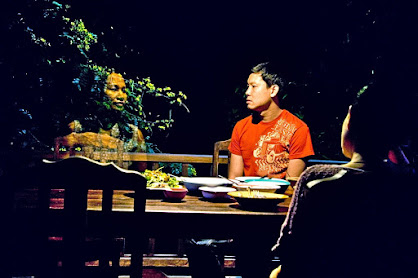
Uncle Boonmee Who Can Recall His Past Lives: Thailand's 2010 submission for Best International Feature Film

Thailand

With the 2010 feature Uncle Boonmee Who Can Recall His Past Lives, Thai filmmaker Apichatpong Weerasethakul crafted one of the most acclaimed movies of that year. The surrealist storytelling here was challenging as it was engaging. Unfortunately, the Oscars have largely failed to recognize avant-garde narrative filmmaking even when it comes from America, let alone when it's in a foreign language. No wonder, then, that Uncle Boonmee failed to not only score a Best International Feature nod, it didn't even make that year's shortlist of contenders. It's a disappointing event that reflects the larger struggles that both Thai cinema and filmmaking from many Asian countries have faced in garnering Academy Awards recognition. No wonder, then, that Weerasethakul decided to stop being an Academy Awards voter, though that was due to struggles with the system of being a voter rather than directly connected to the Academy's inability to recognize Thai cinema.

The Liberator: Venezuela's 2014 submission for Best International Feature Film

Venezuela

Venezuela has submitted movies on-and-off to the Academy Awards since 1978, but they've never scored a nomination, though the 2014 submission The Liberator did make the shortlist for Best International Feature Film that year. Part of the issue has been that Venezuela was erratic in submitting titles to the Oscars during the countries golden age of cinema in the 1980s. Meanwhile, the 1990s saw them regularly sending off titles for Oscar consideration despite this being an era widely seen as a weaker period for Venezuelan cinema. Still, that discrepancy doesn't explain away why the resurging 21st-century Venezluen filmmaking scene hasn't been recognized by the Academy Awards. Meanwhile, the country's long history of being the home for acclaimed motion pictures like Isla de sal makes it extra baffling that the Academy Awards have never found a way to recognize Venezuelan filmmakers even outside of the Best International Feature Film category. 

Indonesia

In a fascinating piece for Southeast Asia Globe, writer Mark Adnum does a deep-dive into the Indonesian film industry, which is in the middle of a resurgence. However, as Adnum notes, that industry struggled for much of the 20th-century, with the 1990s being a particularly grim period for locally-produced cinema. However, modern Indonesian cinema, as the author notes, is not short on gifted auteurs. That explains why, save for 2008 and 2015, Indonesia has submitted a feature film for consideration for the Academy Awards' Best International Feature annually since 2005. Unfortunately, the Oscars have failed to recognize this country's artistic contributions, which have included works like the critically-acclaimed 2018 movie Memories of my Body. Indonesia has stepped up its game considerably when it comes to filmmaking. Why isn't the Academy stepping up its own game by recognizing this country?

Omar Killed Me: Morocco's 2011 submission for Best International Feature

Morocco

While Morocco has frequently been used as a lavish backdrop for American and European cinema, it's had far less luck scoring any kind of major Academy Awards recognition for its own cinema. The countries homegrown cinema dates back to 1958 while the country itself has offered up 16 submissions to the Academy Awards for its Best International Feature category. The closest the country's come to making it to the Oscars stage was with the film Omar Killed Me, which was one of 9 films shortlisted for the Best International Feature category in 2012. Otherwise, Morocco cinema has been largely ignored by the Academy Awards. In addition to the ceremony's own troubles with recognizing African cinema, Morocco's submissions to the Oscars have also struggled due to difficulties to make much noise at the pre-Oscar film festivals. A festival like Cannes can be where foreign-language titles leave a mark that lasts until award season, but much like the Oscars, such festivals have largely ignored modern Morocco films like The Unknown Saint.  The exclusionary practices of the Oscars are not just limited to that awards show.

Jaque Mate: Dominican Epublic's 2012 submission for Best International Feature Film

Dominican Republic

Films hailing from the Dominican Republic have managed to make award season waves in some respects, such as the 2012 title Jaque Mate, which scored a handful of nominations at the Palm Springs International Film Festival and the Washington D.C. International Film Festival. Sadly, that same luck has not translated to the Academy Awards. Granted, the country has only made 10 submissions to the Academy Awards, with all but 3 of them being since 2010. Though this lower number of submissions makes their exclusion slightly less egregious, it's still disappointing that smaller film festivals have managed to recognize the Dominican Republic's contributions to cinema while the Academy Awards have constantly failed to do so.

Laal Kabootar: Pakistan's 2019 submission for Best International Feature Film

Pakistan

To look at the history of Pakistan's film industry is akin to going on a rollercoaster; it's full of ups and downs. While the country has produced its fair share of classics, for decades, the Pakistani film industry ground to a halt. Let Nadeem F. Paracha from Dawn say it better than I ever could: 

Contrary to popular belief, the collapse of the Pakistan film industry was not a gradual process. In fact the crumbling was a rather sudden happening. In July 1977 the populist regime of Zulfikar Ali Bhutto (Pakistan Peoples Party) was toppled in a military coup masterminded by General Ziaul Haq...Zia’s was a reactionary dictatorship...One cultural symptom of [the] social and cultural roll-back [in his dictatorship] was the abrupt collapse of the Pakistani film industry...Another prominent reason for the Pakistani film industry’s growing commercial and creative woes was the implementation of a new censor policy...By the early 2000s, an industry that once produced an average of 80 films annually was now struggling to even churn out more than two films a year...

With decades of turmoil for this industry, it's no wonder that Pakistan cinema never made it to the Academy Awards, especially since the country never even submitted features for Best International Feature consideration from 1963 to 2013. However, Pakistan has proceeded to submit a movie every year since 2013, including positively-reviewed features like Laal Kabootar. The rollercoaster ride that is the history of Pakistan's cinema has led to a modern-day film industry full of challenging and acclaimed features. It's time the Academy Awards recognized artistic works from a film industry that's managed to endure through incredible hardship.  

The Orator: New Zealand's 2011 submission for Best International Feature Film

New Zealand

New Zealand has left a pretty large imprint on the world of modern cinema. Not only is it the place where many blockbusters engage in principal photography, but iconic modern directors like Peter Jackson and Taika Waititi hail from this country. Yes, New Zealand has made an undeniably large impact on the medium of film...so how come the country's non-English language titles have been excluded from the Oscars? The Best International Feature Film category has never seen fit to nominate the six movies New Zealand has submitted for consideration in this category. Given the minimal amount of submissions and the fact that English-language titles from the country (like Whale Rider) have managed to garner Oscar nominations, New Zealands exclusion from this category isn't exceedingly egregious. Still, even New Zealand is clearly not impervious to the double-standards the Oscars have for English-language and foreign-language titles. 

French Exit has only fleeting glimpses of artistic success

As French Exit begins, Frances Price (Michelle Pfieffer) has a problem. Her money has run out. She's a woman who's used to living in the lap of luxury in New York City so this is a bit of a problem for her. Looking for a new start, Price hops off to Paris, France with her son, Malcolm (Lucas Hedges), and her cat in tow. In these new surroundings, Frances has to make do with a new kind of life. She must befriend people she never would have befriended before, she even, eventually, must do without her cat. Through all these changes, maybe she'll get some kind of revelation about her life. Or maybe she'll remain the same o'l detached rich person she's always been.

French Exit is a classic example of a bunch of eccentricities searching for a movie to inhabit. There are strange qualities a-plenty in Patrick deWitt's screenplay, with the best of them, like an extended gag involving a frozen sex toy, making good use of understated responses from the characters. Too often, though, French Exit leans on oddball behavior so heavily that it becomes the entire crux of the piece. Too much of this behavior neither stimulates the mind nor tickles the funny bone. All the while, vacant characters played by talented actors walk around lavish Perisian homes in search of something to do. They never find what they're looking for. 

Part of the issue is that the characters themselves could stand to be as distinctive as the most ludicrous moments of French Exit. Malcolm putting a napkin over his face to avoid a confrontation with his fiancee, Susan (Imogen Poots) is humorous, but that's the liveliest the character gets. Too often the character has no real personality to speak of. Susan, meanwhile, doesn't have a personality, she's just a standard Movie Girlfriend whose entire existence revolves around a male character. As for lead character, Frances Price, she's like the star of a bad Succession knock-off that wandered off-set. You further appreciate just how good the writing on that HBO show is when you see uninteresting takes on wealthy people going awry.

It's so hard to get invested on Price's story on any level beyond the fact that Michelle Pfieffer remains as compelling of a screen presence as ever. If French Exit consisted solely of Pfieffer dropping rude comments to people, I probably would have adored the whole movie. These biting remarks are delivered with such darkly humorous casualness by Pfieffer while her compelling nature as an actor makes the aloof nature of Frances Price easier to swallow. She's bringing her A-game to a movie that's barely got a pulse. It's a disappointment, though die-hard fans of Pfieffer as a performer will probably get their money's worth from her turn in French Exit

Director Azazel Jacobs is the one behind the camera on French Exit, a puzzling choice for a movie with such stylized detours. By contrast, Jacobs has largely down subdued slice-of-life movies like The Lovers and Terri. Jacobs lends a visually competent look to French Exit leaning heavily on wide shots, but his direction often feels too restrained for its own good. The most peculiar scenes of French Exit, like a seance to communicate with Price's missing cat, are largely executed in a visually derivative way. These are the moments where I yearned for a filmmaker more experienced in stylized storytelling to be directing this film. A little more visual flourish could have helped make French Exit at least tantalizing as eye candy.

There are parts of French Exit that certainly work, particularly entertaining supporting performances from Danielle Macdonald and Susan Coyne. The fact that large sections of the movie are striving to center on unlikeable characters and unorthodox dark comedy is also an admirable choice. But admirable intent does not a cohesive movie make. In the end, French Exit only ends up being a few interesting pieces and a largely unsatisfying whole. 

Saturday, March 27, 2021

Bad Trip isn't bad but it does fall short of Eric Andre's best comedy

For almost a decade now, Eric Andre has been providing unbelievably funny material through his Adult Swim program The Eric Andre Show. For those who haven't seen it, it's a parody of a traditional talk-show blended with prank segments where Andre and sidekick Hannibal Buress engage in elaborate and bizarre comedic scenarios much to the befuddlement of everyday New Yorkers. It's a hysterical program that makes great use of masterfully-timed editing, Andre's commitment to the utterly weird, and the shows growing comfort with engaging in borderline surrealist humor. Remember that Octopus sketch? It was as much the stuff of nightmares as it was comedy! 

Andre's now moved over to the big screen for Bad Trip, a movie that isn't quite a feature-film adaptation of the entirety of The Eric Andre Show. However, it carries over much of the show's crew (including director Kitao Sakurai) and definitely feels like an extension of those prank sketches. Here, Andre plays Chris Carey, a guy living a meager life in Florida when his old High School crush, Maria Li (Michaela Conlin) walks back into his life. They only have a brief interaction, but after learning she has a New York City art show in four days, Carey is determined to get there and reunite with Li. He'll need the help of his best buddy Bud Malone (Lil Rel Howery) as well as the car belonging to Malone's sister Trina Malone (Tiffany Haddish).

If there's a big issue with Bad Trip, it's that it reminds one too much of classic Eric Andre hidden-camera segments. In the best of those, Andre would show up as a staggeringly random comic character (like the Ranch Up! guy) told through unpredictable editing and random sound effects. Bad Trip, meanwhile, has comedy set pieces that are intentionally more grounded. Andre is always playing everyman Chris Carey, so no delightfully off-the-wall characters here. The absurdist editing is confined to one drug trip sequence. Even if it features prolonged sex scenes between Carey and a gorilla, Bad Trip sometimes does feel like a slightly watered-down version of The Eric Andre Show.

Now, Bad Trip didn't just have to rehash old Eric Andre Show sketches to be good. Time and time again, the hidden-prank comedy film has found ways to reinvent itself. However, confining this kind of comedy to a traditional narrative in a mainstream feature has taken some of the wind out of Andre's sails. It all ends up hewing too closely to those segments without pulling off enough successful comedy of its own. During the flatter comedy moments, it's impossible not to be reminded about how you could be rewatching the bit where Andre smashes up a cop car. Even it's disappointing that it can't quite hit the highs of Andre's past forays, though, Bad Trip still had me smiling for much of its wisely brief runtime. 

Maybe I'm just an easy lay for Andre's comedy, but I did find myself chuckling more often than not with ribald antics happening on-screen. The funniest parts about Bad Trip turn out to be the reactions from ordinary people to the madness happening around them. I especially liked an early scene showing Andre working at a frozen yogurt shop where he handles fruit toppings with his bare hands. The incredulous response from the patrons had me giggling up a storm, ditto a follow-up bit involving their reactions to Andre having an unfortunate encounter with a blender. These passerby's don't need a script to be funny, their off-the-cuff reactions alone are enough to make me chuckle.

The jokes in Bad Trip also tend to excel the darker they get, as seen with a closing bit involving Maria Li and her raw emotional line deliveries. Juxtaposing the framework of a cliche wacky road trip comedy with these bursts of something ripped from brutal reality is an effective recipe for comedy. Meanwhile, Howery, despite not having much prior experience with hidden-camera comedy, proves to be a good pick to bounce off Andre. He embraces all of the wacky material this story throws at him while he also has solid chemistry with Andre in their one-on-one scenes. It can't help but linger in the shadow of The Eric Andre Show, but Bad Trip is a passable diversion, though it probably would have played better watched with a crowd. This is the kind of film you need to watch with the energy of a packed house of moviegoers, not alone in your room on a Friday night. 

Take a big o'l swig of remarkable filmmaking with Another Round

In American cinema, Mads Mikkelsen always plays characters who are aberrations. With his distinct accent and equally unique screen presence, Mikkelsen can't help but attract your attention as something unusual you must keep an eye on. A number of big blockbusters have utilized that to make him an eye-catching baddie for James Bond and Doctor Strange to fight. But in his home country of Denmark, Mikkelsen's able to play characters who are just everymen. He's no longer the lone person with a Danish accent in an American/British feature. He's just another guy, which is an avenue Mikkelsen can also play incredibly well (is there anything this guy can't do?)

In Another Round, Mikkelsen plays Martin, a school teacher whose wife could stand some improvement. He barely engages with his students, he and his wife are on rocky terms, it just feels like, as he this middle-age, that life has already stopped. He and three of his co-workers decide to spice things up by engaging in a pact. Taking inspiration from psychiatrist Finn SkÃ¥rderud, Martin and his friends will constantly drink to ensure that their Blood Alcohol Level is always at 0.5%. SkÃ¥rderud theorized that this makes people more relaxed and willing to embrace bold choices. What's the harm in trying to inject some fun (and booze) into their lives?

Writers Tobias Lindholm and Thomas Vinterburg (the latter of whom also directs) have hatched a fantastic premise for a movie that they manage to execute with grace. There aren't any half-measures here in terms of realizing such a bold storyline. Lindholm and Vinterburg embrace all the complicated emotions inherent in living a life constantly intoxicated. Best of all, they keep the audience constantly questioning what we should be feeling. Should we be excited that Martin's life is opening up thanks to his persistent alcohol consumption? Should we handwave away the initial signs of trouble? Another Round masterfully challenges the audience without ever sacrificing our genuine emotional connection to the characters. What a hat trick! 

Part of how the characters maintain such an engaging quality is because of the similarly layered performances from the lead actors. All four of our main guys maintain a down-to-Earth nature that makes their plight easy to invest in. Similarly, they portray the inebriated nature of their respective roles with equal levels of authenticity. On a character level, it's also smart for Lindholm and Vinterburg to not make the day-to-day lives of Martin and company wrought with over-the-top melodrama. These guys aren't looking for an escape because every conceivable tragedy has befallen them. More mundane circumstances (troubles communicating with a spouse, awkward teaching experiences) inform their desire to find some form of release.

Through this method, both the performers and the audience have a discernible realistic entry point into a plotline that, on paper, sounds so ludicrous. On a visual level, Vinterburg's direction proves remarkable, especially his sparing but effective use of white text against a black background to represent either Blood Alcohol Levels increasing or the characters writing an academic study about their outlandish "experiment". I also appreciate how Vinterburg's filmmaking can so effortlessly capture the drunken state of Martin and his companions either through a filter of dark comedy or in a manner that emphasizes the gravity of their scenario.

This is especially true of youth soccer coach Tommy (Thomas Bo Larsen), who becomes the most alcohol-dependent of the main four characters. You can't help but chuckle at the dark comedy found in an early scene where he attempts to keep drinking without letting his adolescent players know what he's doing. However, a late scene where Martin checks in on Tommy while he's trying to go sober only for Tommy to constantly reach for a cold drink effectively gets you holding your breath. Vinterburg's careful framing and sense of staging in both sequences help to vividly render their distinct moods. In the process, Vinterburg creates a tone for Another Round that's as complex as its characters. 

And then, of course, there's Mads Mikkelsen. Dating back to his days on Hannibal, I've been an easy sell for Mikkelsen but it's so fascinating to see him in a project that strips away any genre storytelling trappings. Mikkelsen is playing someone firmly grounded in reality here and it's the type of role that he can excel at. I especially love the way he portrays each new stage of Martin with constant levels of conviction. Thanks to Mikkelsen's range as an actor, the earliest buttoned-up version of Martin is just as believable as the one we see dancing on a pier in the climax. His dynamite lead performance in Another Round is just one of the many ways this movie thoroughly impresses.

Thursday, March 25, 2021

The Financial horrors of Inside Job are just as captivating as ever


When doing a documentary on a then-current event issue, you do run the risk of becoming dated. It's a danger associated with any film, but for docs, in particular, a project can quickly age about as well as milk on the counter. Maybe the public perception of your subject matter changed drastically. Maybe new details rendered your depiction of this issue moot. Maybe, removed from the immediacy of this event, the documentary simply doesn't hold up as its own piece of filmmaking. Those are all valid concerns but they don't apply to the Oscar-winning documentary Inside Job. Not only is it well-made enough to capture your attention under any circumstances but the horrors it depicts have only gotten worse in the decade since its release.

Inside Job is about the 2008 global recession and the events that led to Wall Street bankers nearly taking not just the American economy but the global economy. Through director Charles Ferguson and narration provided by Matt Damon, Inside Job guides the viewer through a world of corruption that didn't just come out of nowhere at the end of the 2000s. Moviegoers get a detailed but not overwhelmingly intricate portrait of how this recession was long-in-the-making. This is thanks to decades of shady actions on behalf of large banks and a lack of government oversight. Seeing it all laid out like this is enough to get your jaw to drop and your blood to boil.

All of that information is nicely conveyed through both handy visual aids and also a sense of brevity on the part of Ferguson as a filmmaker. He realizes that dumping every bit of bank lingo won't really help the viewer understand the bigger picture behind the economic crisis of 2008. Instead, he portrays the heart rather than the numbers of this matter. We see C-SPAN footage of testimony from bank executives shirking responsibility for their actions while late in the game we witness footage of everyday people piling up in tents now that their houses have been foreclosed in the wake of economic turmoil.

Human beings are the focus here, not being suffocatingly detailed. It's a decision that keeps Inside Job light on its feet, easy to watch but still incredibly informative. When I say this production is "easy to watch", I mean that. A montage sequence in Inside Job depicting various corrpt bank executives getting arrested set to the tune of Takin' Care of Business is ridiculously fun to watch in addition to making your brain break in terms of just how many people in this industry are responsible for wrecking people's lives. Equal parts entertainment and equal parts rage-inducing call to action, the scene is Inside Job in a nutshell.

The most appropriately cutting parts of Inside Job come in its final half-hour, as Ferguson's interviews with various people connected to either the U.S. government's financial sector, financial institutions at colleges or big banks go incredibly sour. Professors get snippy, former chairmen go totally quiet. You can tell Ferguson's filmmaking is doing something right by getting such powerful people to clam up. This digression revolves around how colleges ruled over by people who normalized shady Wall Street behavior are now teaching the next generation to screw over the public. The horrors that led to the 2008 economic crash weren't limited to New York, they're also spread across the country.

Inside Job's way of showing how these practices are still being normalized for the future is one of the key ways it remains tragically relevant in addition to the fact that economic inequality has only grown in scale in the years since its release. No dated documentary filmmaking to be found here, Inside Job is as well-made and urgently important as ever.

Thursday, March 18, 2021

Zack Snyder's Justice League improves on the past in more ways than one


Well. Here we are again.

Zack Snyder was originally set to direct a Justice League movie as his follow-up to prior DC Extended Universe titles Man of Steel and Batman v. Superman: Dawn of Justice. Production complications surrounding both creative conflicts with Warner Bros. and the tragic loss of Snyder's own daughter led to Snyder walking away from the production. Joss Whedon and Warner Bros. executives took over the project from there, resulting in the release of a Justice League movie that tried to appeal to everyone but pleased nobody. Since then, an extensive fan campaign has urged for Snyder's cut of Justice League to see the light of day. It finally has thanks to the release of Zack Snyder's Justice League.

In the broad strokes, both the theatrical cut and Snyder's cut of Justice League share the same story. Bruce Wayne (Ben Affleck), in the wake of Superman's (Henry Cavill) death, decides to assemble a team of superheroes to defend the Earth from future attacks. The team eventually consists of Wonder Woman (Gal Gadot), Aquaman (Jason Momoa), Cyborg (Ray Fisher), and The Flash (Ezra Miller). Their enemy turns out to be the alien Steppenwolf, who seeks out three mystical Mother Boxes that are located on Earth. If he gets those boxes together, the Earth and all its inhabitants are toast. These five heroes will have to work together to stop Steppenwolf and even then they may have to call on the help of a deceased Kryptonian to truly win the day...

It's in the details where Zack Snyder's Justice League is a radically different creature than the theatrical version of Justice League. A studio mandate to keep the runtime under 2 hours meant that the original version of Justice League was a truncated creation that kept on zipping but never left enough room for things to have an impact. That's not a problem for Zack Snyder's Justice League, with its 240-minute runtime. That Bella Tarr-esque length allows for scenes that are downright excessive and would totally have gotten cut in any other circumstance. But it also allows for something that was missing in Snyder's prior DCEU forays: humanity.

Not only do these quiet scenes help to add further layers to the members of the Justice League but they are also remarkably cognizant of everyday people, a population that often gets lost in modern superhero movies. Watching Cyborg use his newfound superpowers to help a financially impoverished woman out doesn't just give us a glimpse at his heart, it also reminds us of the ordinary humans just trying to get by in this superhero world. Through these reminders of the humanity of superheroes and of normal humanity, it's easier to get invested in the inevitable third-act fight against Steppenwolf's forces. To my happy delight, I was actually wrapped up in these versions of The Flash and Cyborg, I wanted them to succeed and help save people like that cash-strapped lady. It doesn't hurt that big scenes exploring the inner lives of these heroes frequently eschew dialogue for largely visual storytelling, a trait that's always been Snyder's strongest suit as a filmmaker dating back to his days as a commercial director.

It also helps that the movie delivers several set pieces that actually lean on the unique abilities of the individual superheroes rather than just have everyone punch really hard. The cluttered action of the original Justice League has been replaced with more specifically detailed instances of spectacle. The Flash, for instance, gets a number of cool moments, like his memorable introduction sequence, that could only be accomplished through super-speed. This especially proves useful when the superheroes begin to fight as a team, it becomes genuinely fun to watch how Cyborg's powers might just intersect with all of Batman's gizmos. It's all fun to watch and none of it apologizes for being goofy superhero nonsense. The grimness and grounded realism of Snyder's earlier DCEU films has been eschewed for over-the-top superhero mayhem. It's very much a trade-up that works in the director's favor.

Of course, just because Zack Snyder's Justice League improves on the theatrical cut doesn't mean it's a flawless production. For one thing, big baddie Steppenwolf is still a snore, a poorly-designed creature who has no real menace or personality to speak of. The Superman resurrection, meanwhile, is still clumsily executed. It's a predictable detour (who really thought Superman was dead?) that comes right when the plot should be propelling forward, not pausing to linger on Superman's revival. In both versions of Justice League, Superman's return is a major issue, though at least here we get an enjoyably bombastic scene of Superman taking off to help make this storytelling issue go down easier. 

Even more egregious in terms of storytelling issues is the first act, which is way too scattered for its own good. Team-up movies usually have this problem, you have to start in so many disparate locations before you bring everyone together. However, most of these movies don't run for 240 minutes and Zack Snyder's Justice League choosing to keep everything so disparate for so long does become a problem. Another trip to the editing bay would have done this project some good. Plus, because it's a Snyder movie, there's also excessive use of slowing down action and then speeding it back up again as well as some amusingly on-the-nose needle drops.

Previously, Snyder did attempts at the deconstruction of DC Comics icons. They never quite worked for me because I never got any sense of the larger themes Synder wanted to tackle while the characters never registered as people. With his own take on Justice League, Snyder's taken a cue from his best movie, Legend of the Guardians, and done a straightforward adventure story where his darker sensibilities are a garnish rather than the whole dish. With a much less oppressive tone and more recognizably human characters, Zack Snyder's Justice League is a much more manageable and enjoyable affair. It's still flawed, sure, but the individual pieces of Zack Snyder's Justice League do manage to come together (right now) in a largely interesting fashion.

Monday, March 15, 2021

In Laman's Terms: Academy Award Nomination Thoughts


 In Laman's Terms is a weekly editorial column where Douglas Laman rambles on about certain topics or ideas that have been on his mind lately. Sometimes he's got serious subjects to discuss, other times he's just got some silly stuff to shoot the breeze about. Either way, you know he's gonna talk about something In Laman's Terms!

As someone who usually complains endlessly about Academy Award nominations this year I...actually was generally pleased with the nods?

Oh sure, there were snubs a-plenty (Da 5 Bloods, gone, but not forgotten!) but I was surprised that the good outweighed the bad this year, with some actually pleasant surprises, like both of Judas and the Black Messiah's lead actors getting in for Best Supporting Actor. Considering the Academy has done a terrible job in the past of recognizing Asian actors through snubbing the casts of Slumdog Millionaire and Parasite, it was also nice to see two Minari cast members score acting nods.

Best of all, the Best Director category gave us our sixth and seventh women to ever be nominated in the Best Director category! Chloe Zhao and Emerald Fennell, take a well-deserved bow for your tremendous feats! Zhao's especially impressive because she's the first woman of color to be nominated in the category! Women of color filmmakers have been a staple of cinema nearly since its inception (hi Madame C.J. Walker), so it's appalling they haven't been recognized until this point. Still, here's to hoping Zhao has broken down the doors and we'll see far more recognition for women of color filmmakers in the future.

Another takeaway I had from these nominations was in the Best Picture category, specifically what studios were responsible for these titles. Due to movie theaters being closed for 2020 many, myself included, though the streaming services would trample traditional theatrical studios in the BP category. Variety even penned an article in November pondering if Netflix would secure the most BP nominations for a single studio in an Academy Awards ceremony! Both Netflix and Amazon had a massive presence at this year's Academy Awards, but neither dominated the BP field. Netflix got two nominations, same as last year, Amazon got their first in four years.

Meanwhile, five of this year's eight Best Picture nods came from traditional studios, including old stalwarts like Sony Pictures Classics and Searchlight Pictures. Even Warner Bros. scored a BP nod with Judas and the Black Messiah. This isn't meant to be a "streaming sux!" declaration, Netflix's presence in nearly every category this year shows an impressive level of versatility on their part. I just find it interesting that, even in a year where theaters were closed, traditional movie studios were still alive and kicking.

Meanwhile, my only severe grievance with this morning’s Oscar nods (beyond the appalling omission of Welcome to Chechnya in Best Visual Effects in favor of Mulan) is the disappointing reminder that the Academy is still really bad at recognizing Black filmmakers. Thank God Judas and the Black Messiah got into Best Picture, but it was the only Best Picture nominee this year directed by a Black filmmaker. Then there's the Best Director category, which has only ever seen six Black nominees, five of which came about since 2008. It would’ve been wonderful to see Judas director Shaka King or other notable qualifying directors like Regina King, Radha Blank, Garrett Bradley, Spike Lee, Channing Godfrey Peoples, Melissa Haizlip, George C. Wolfe, Ekwa Msangi and countless other artists make it into this category. 

The lack of recognition for Black artists extended into categories like Best International Film, where films Night of the Kings were snubbed. To be seriously fair, Black artists weren't entirely erased this year at the Academy Awards, as seen by several of the Best Original Song nominees and a number of acting nods. However,  the biggest categories like Best Picture and Best Director are clearly still struggling to recognize the massive amount of Black talent out there in the world. The presence of two women in the Best Director category in a single year is proof the Academy Awards can evolve and improve. It's high-time, though, such improvements were used to honor artistry from Black filmmakers.

Anyway, though, overall, not a bad crop of Academy Award nominees at all. I especially liked a lot of little pleasant surprises that cropped up in the nominees for the 93rd Academy Awards, like Aardman scoring a place in the Best Animated Feature category as well as Thomas Vinterburg snagging a Best Director nomination for Another Round, always cool to see foreign-language filmmakers in that category! It also looks like I have a couple of movies to catch up on, like The Father, Another Round, and...oh man, I have to catch up on Hillbilly Elegy now, don't I? 

Thursday, March 11, 2021

Anvil! The Story of Anvil is a rock documentary with heart to spare


In 1984, a gaggle of rock bands came to Japan and just crushed it, their performances slayed the crowd. Among those on the stage were Bon Jovi, Scorpions, and a Canadian metal band by the name of Anvil. The group, whose lead members were singer and guitarist Steve "Lips" Kudlow and drummer Robb Reiner, was full of outrageous attitude and guitar-playing that was dynamite. The other bands that performed that day went on to iconic careers. Anvil, meanwhile, faded into obscurity. Anvil! The Story of Anvil is a documentary that chronicles Kudlow and Reiner from 2005 and 2007 as they try their hardest to get their band to the next level of fame.

In the modern world, Kudlow works as a driver for Children's Choice Charity while Reiner is in the construction business. They're not the most glamorous jobs but they put food on the table for their respective families. When they're not at those jobs, Anvil still delivers performances at any venue that'll host them. Though they never get the biggest crowds, but Kudlow is certain that Anvil can still knock the world off its socks. Anvil gets a chance to prove that there's still a place for them in the modern music scene when they get the chance to tour Europe. Maybe this is the big break they're looking for...or maybe it's another dead-end for a band that just can't catch a break.

As a post-credits still image from the 1980s makes clear, director Sacha Gervasi is a big Anvil fan himself. However, he's not making Anvil! The Story of Anvil as a rose-tinted promotional video. Gervasi's camera refuses to sand off the edges of the hardships this band goes through, especially in their ill-fated European tour. After making it clear how much this tour means for Kudlow and Reiner, your heart just breaks as Gervasi captures incidents like a manager refusing to pay Anvil for their performance. Every missed train, every small crowd, every new bump in the road for the band Anvil is put on full display. 

In the process, Gervasi makes the sheer endurance of these band members something that's impossible not to get wrapped up in. It's been a while since I was as captivated by a movie as I was with Anvil! and that quality of endurance is a key reason why I was riveted. The members of Anvil have been performing for decades, faced with all kinds of struggles, and yet they still go out there and give each show their all? That's impressive. Through highlighting the turmoils in Anvil!, Gervasi is able to render the people in this band as just that, complex human beings. He also accomplishes this by allowing the production to slow down and giving us moments to know the intimate day-to-day lives of Anvil's members, like when we get to see Reiner's garage covered in his own paintings. 

Through painting Anvil's participants in such a richly detailed manner, the viewer becomes as enamored with these musicians as Gervasi and other Anvil die-hards. Both the emphasis on hardship and the intimate nature of Anvil! also ensure that the moments of true connection between Kudlow and Reiner are incredibly touching. Like so much of Anvil!, their friendship isn't depicted as idyllic. They fight, they argue, they seem like they'll never get back together again. But decades of friendship have cemented a bond here that endures even in their most fraught moments. When Reiner notes that he'd catch Kudlow if he ever threw himself off a cliff, how can you not get a lump in your throat? 

Those are the kind of moments that lend such rich humanity to this underdog musical tale. Anvil! is many things at once. It's a comedy, it's a documentary, it's a showcase for some memorable tunes. Above all though, it's a salute to those who refuse to abandon their ambitions as well as a reminder of what really matters. As Ludlow notes in his closing narration, people, whether they're your family or bandmates, are what make life worthwhile. You can have fame and fortune, but what good is it without people to share it with? The band at the center of Anvil! The Story of Anvil may have never become icons on par with Kiss, but Ludlow and Reiner do have their friendship. Maybe, as this documentary poignantly reflects, that's enough. 

Sunday, March 7, 2021

The SpongeBob Movie: Sponge on the Run focuses too much on the past to its own detriment


I haven't watched SpongeBob SquarePants in years. It was a formative part of my childhood and I still quote classic episodes and that first movie all the time. But I couldn't tell you the last new episode of the show I actually watched. Despite having been absent from Bikini Bottom for so long, this whole universe came flooding back to me as The SpongeBob Movie: Sponge on the Run began. Much like riding a bicycle, the world of SpongeBob is just something you don't forget. It felt momentarily nice to return to something so familiar. Too bad the rest of the movie just isn't anything special. No amount of nostalgia could liven up this production.

Sponge on the Run, the third feature-length adventure starring SpongeBob (Tom Kenny), see's Plankton (Mr. Lawrence) deciding that the absorbent fry cook is the whole reason he can't secure that Krabby Patty Secret Formula. In response, he steals SpongeBob's pet snail Gary and sends him off to King Poseidon in Atlantic City. SpongeBob and Patrick set off to retrieve the mollusk, a journey Plankton is sure the duo will never return from, thus ensuring he can get the secret formula back. What follows is a road trip where two best buddies will try their best to stay on their mission without getting distracted. Meanwhile, the denizens of Bikini Bottom will start to realize how important that peppy square really is.

SpongeBob SquarePants was always defined by comedic absurdity. This was a show where episodes could end with a gorilla riding a horse off into the sunset or could feature casual jokes about husbands being turned into lamps. Sponge on the Run tries to capture this level of ridiculousness and occasionally succeeds. The best-extended gag in the whole film involves SpongeBob and Patrick inadvertently killing a demon creature just by fiddling around with curtains. Meanwhile, the sight of Keanu Reeves as a tumbleweed followed shortly by a bunch of cactus singing a reprise of Gary Wright's Dream Weaver will make both five-year-olds and stoned adults giggle.

Unfortunately, too many of the gags in Sponge on the Run are never as over-the-top as they could be. To boot, the movie keeps reminding you of past SpongeBob productions so much that it rarely yahs the audacity to do something new, something fresh. As a result, you can't help but realize how comparatively restrained Sponge on the Run is. Nothing in here matches the bizarre sight of SpongeBob and Patrick just spewing tears into each other's mouths or Patrick randomly showing up in high heels and fishnets. It's not that Sponge on the Run needed to replicate the past, it just needed to find its own demented groove and it never gets there.

Part of the problem is the animation, which brings SpongeBob and pals into three-dimension through computer-animation. The team at Mikros Animation have done a solid job translating this world into a CGI domain that evokes the look and feel of stop-motion. Still, the inevitable restrains of CG compared to 2D animation means Sponge on the Run can only do so much visually. There's just not enough flexibility with these character models to allow for truly zany facial expressions or sight gags. It's another instance of Sponge on the Run trying to channel the lunacy of past SpongeBob productions, only to find its reach far exceeding its grasp. 

Sponge on the Run's problems with executing comedy becomes especially apparent in the last twenty minutes when writer/director Tim Hill decides to take an abrupt swerve into an ocean of sentimentality. A series of flashbacks that also serve as an extended advertisement for that new Kamp Koral prequel show try their best to tug at your heartstrings. Instead, the movie merely grasps at straws. The story hasn't earned this level of poignancy and the ham-fisted dialogue just beats you over the head with the moral of the overall feature. Don't people watch SpongeBob for the gags? These kinds of decisions serve as an anchor that drags Sponge on the Run down. It's not terrible, but I doubt it's a movie that will truly satisfy either SpongeBob fans or just kids looking for a new comedy to watch.

Tuesday, March 2, 2021

The Virgin Suicides is a captivating and wistful experience

It's always a fascinating experience to go back to a filmmaker's roots after having seen their later movies. It's like looking at childhood pictures of someone you got to know as an adult. In the case of director Sofia Coppola, she got her start as a filmmaker with The Virgin Suicides. Before Lost in Translation and The Bling Ring, Coppola established her name as an auteur of note with this melancholy look at teenage existence. In some respects, it's very much part and parcel with her later works, but in other respects, The Virgin Suicides carries its own unique disposition that reflects the creative elasticity of Sofia Coppola.

A foreboding air pierces the screen as The Virgin Suicides begins. Giovanni Ribisi's narration told from the perspective of a local boy all grown up, informs the viewer that the daughters in the Lisbon family, Therese, Mary, Bonnie, Lux, and Cecilia, eventually committed suicide. Some movies hinge their drama on whether or not a character will survive. The Virgin Suicides decidedly answers that question right away. The tension here thrives on the uncertainty over the circumstances that led to these girls taking their own lives. Cecilia is the first to go and her passing leads to the Lisbon parents, Ronald (James Woods) and Mrs. Lisbon (Kathleen Turner), exact extreme control over their children.

In their determination to never lose another daughter, these two adults only exacerbate the circumstances that have led to the sorrow of these five girls. Therese, Mary, Bonnie, Lux, and Cecilia, they all just want to live, to be people who are allowed to have complicated lives. But they're not seen as people. Not by their parents, nor by classmates who whisper about them nor by newscasters just looking for a big story and especially not by boys like Trip Fontaine (Josh Hartnett). The Virgin Suicides holds up a mirror to a familiar world where even adolescent girls are crushed by society's expectations of what women should be. 

It's impossible to navigate all that, let alone the overwhelming emotions that naturally stem from living in this realm day-in-day-out. Coppola's screenplay, adapted from a book by the same name by Jeffrey Eugenides, finds such emotionally involving ways of reflecting these experiences. The tree in the girls' front yard, for instance, becomes a tragic manifestation of both Cecilia and the frequent futility of standing up against authority. Meanwhile, an especially insightful detail about The Virgins Suicides' depiction of systemic dehumanization of women is in Mrs. Lisbon. She herself is responsible for smothering and restricting her daughters, for putting up standards of how women "should be".

Sometimes, I absolutely hated Mrs. Lisbon, like in a scene where forces Lux to burn her records. But then I realized that she doesn't get a name. She's become so oppressed by the world that she's trying to protect that she's no longer a person with a distinct name. She's a housewife, a prize for her husband, but she's not her own standalone being. It adds a tragic undercurrent to a figure who could have been simply a one-dimensional antagonist. The same level of thought that's gone into the character of Mrs. Lisbon also informs the ethereal filmmaking of The Virgin Suicides, as Coppola's direction renders the world of these five girls like a dream that always stays just out of reach.

It's an atmosphere that proves nothing short of captivating, especially when paired up with the most affecting melancholy moments of the production.. Here, The Virgin Suicides goes from emulating a dream to evoking wistful memories, as if we're replaying visions of the past that we wish we could change. You feel as though you've walked the sidewalk of the Lisbon's neighborhood or passed by this family's house. It's a subtly transportive style of filmmaking that shows such skill on the part of Coppola. You'd never guess this was her directorial debut from her control behind the camera. Coppola's made many films after The Virgin Suicides, many of them great, but her directorial debut may still be her most excellently-realized creation.

Monday, March 1, 2021

Raya and the Last Dragon doesn't break the mold but does touch your heart


Walt Disney Animation Studios has always loved fantasy storytelling. Heck, it’s been ingrained into the studio's DNA since its first movie, Snow White and the Seven Dwarfs. But there’s a different strain of fantasy storytelling going on in Raya and the Last Dragon, one that owes more to Jeff Smith’s Bone than Frozen. Action-oriented fantasy isn’t something Disney Animation has a massive amount of experience in, but Raya and the Last Dragon makes for a fine foray into that domain. Lovers of traditional Disney fare need not despair, all the hallmarks of these films (cute animal sidekicks, celebrity-voiced comic relief, etc.) are still around in a pleasant enough fashion to excuse their familiarity.

Raya (Kelly Marie Tran) is the daughter of a chief in the land of Kumandra. This realm has been divided into five sections, with no one trusting each other as a massive plague ravaged the land and turns all it touches into stone. There is hope for this land, though. Raya believes that the very last dragon in existence, Sisu (Awkwafina) has the power to save Kumandra just as she did once long ago. To achieve this, Raya and Sisu will have to unite the disparate pieces of a magical orb while working with a ragtag group of misfits, including an adolescent chief and an intimidating warrior. They'll also have to face off against Namaari (Gemme Chan), with whom Raya has a personal grudge, as well as Raya’s difficulties with trusting anyone.

The weakest spots of Raya and the Last Dragon are the ones where it tends to play things traditional. The comedy, for instance, can end up being too broad, particularly distracting uses of modern-day slang (“Bling is my thing!”) in a period-era setting. There’s also the issue that the opening fifteen minutes are too heavy on expository dialogue, characters end up lecturing about the past rather than just being people. Luckily, much of Raya hews towards unique traits, such as the stark way the movie defines its heroes. There's a sense of darkness to how the film depicts its world ravaged by the past from the moment it first introduces Raya riding atop her beetle/bear steed Tuk Tuk across a desolate desert landscape. She looks like a John Ford protagonist as imagined by Avatar: The Last Airbender.

That aesthetic is unique enough to grab one's attention while the undercurrent of sobriety in the ensuing story maintains your attention. Rather than have a mystical prophecy set everyone up as easily believable saviors, Raya and her various companions are defined by their loss. They’re all navigating an unfamiliar world deprived of the ones they love. There’s underlying trauma to even the goofiest characters in Raya and the Last Dragon. Committing to treating that trauma seriously turns out to be one of the movie's best assets, it lends the whole thing some tangible gravity. The same can be said for how screenwriters Qui Nguyen and Adele Lim commit to making Raya messy in her trust issues. Raya can be an exhilarating fighter and kind soul but like any of us going through intense emotional experiences, Raya's also capable of not doing the right thing. There's a relatable sense of imperfection to this protagonist that's nicely-realized, particularly through Kelly Marie Tran's vocal performance.

All of that character-based material makes for a good grounding to the adventure aspects of Raya, which prove fittingly sweeping. Directors Don Hall and Carlos Lopez Estrada, the former of whom previously helmed the action-oriented Disney Animation film Big Hero 6, use Raya as a chance to embrace all kinds of stylized set pieces that could only be captured through the world of animation. Their action reminded me of a line from the producers of Kung Fu Panda, where they mentioned they didn't want their action scenes to leave anything for the big PG-13 blockbusters. Similarly, Raya's various chase scenes and big hand-to-hand fight scenes are exciting enough to fit into any good blockbuster, they're not just sanitized versions of what you'd find in older-skewing fare.

That action is captured through well-done fight choreography that has real weight to it (a difficult feat to pull off in fully-animated environments) while Hall and Estrada show an admirable affinity for memorably grandiose imagery. They also make use of slick camerawork that, at times, feels like it's channeling the rapid-fire editing and camerawork seen in a Guy Ritchie vehicle. Speaking of visuals, any of the scenes revolving around Sisu and her unique abilities as a dragon make use of some delightful animation This isn’t a “grounded” vision of a dragon, this is a dragon as envisioned by a ten-year-old. Plus, giving Sisu water-based abilities sets her immediately apart from the traditional fire-breathing dragons in pop culture, even if her name kept making me think of a defunct streaming service

It's not just Sisu that proves to be a visual treat here in Raya and the Last Dragon. There's no shortage of beautiful backgrounds here in Raya, with the various sets for the individual kingdoms especially conveying so much history. I desperately wish both of Disney's animation houses could find more varied animation schemes than juxtaposing cartoony characters with ultra-realistic backgrounds. Ditto for finding more inventive ways of designing computer-animated humans. Still, at least Raya is a pleasing version of those visual details. In its animation and other key ways, Raya and the Last Dragon is definitely a familiar Disney Animation yarn. However, it (mostly) packages up the familiar in enjoyable wrapping while also delivering its fair share of inventive touches, especially in its adventurous tone. Any movie that makes me want to go home and crack open my The Complete Bone book has got my approval!