Friday, November 25, 2022

Steven Spielberg compellingly delves into the past with The Fabelmans


They say "you can't go home again," but leave it to Steven Spielberg and writer Tony Kuschner to prove that axiom wrong, at least in the very specific circumstances of The Fabelmans. With this film, Spielberg has torn the veil of allegory and just made an autobiographical drama reflecting his upbringing. Broken families have always been a part of this man's work, but now we get to see the genesis of where that fascination came from. There's a version of The Fabelmans that becomes too insular, the cinematic equivalent to a therapy session we feel uncomfortable watching. Thankfully, much like in their prior collaborations such as West Side Story, Munich, and Lincoln, Spielberg and Kushner have knocked it out of the park with The Fabelmans. Whether you know a little or a lot about this man, The Fabelmans will surely work its magic on you.

The Fabelmans makes its potency and thoughtfulness clear from the very get-go in a scene depicting an adolescent Sammy Fabelman (Mateo Zoryon Francis-DeFord) nervously waiting in line to see The Greatest Show on Earth at the movie theater. The camera is initially positioned in a way so that we don't see his parents from the waist up, a perfect way to suggest that we'll be seeing this movie primarily through the eyes of Sammy. As he expresses constant nervousness about seeing a feature on the big screen, his parents, Mitzi Schildkraut-Fabelman (Michelle Williams) and Burt Fabelman (Paul Dano), try to console him in ways that reflect their individual personalities. Burt gets wrapped up in explaining how the film projector works while Mitzi just tells her son that movies are like dreams. It isn't long before Sammy is sitting in that theater and discovering how right his mom was. Movies are dreams...and he doesn't want this dream to end.

From here, The Fabelmans chronicles Sammy (who eventually grows up into a 16-year-old played by Gabriel LaBelle) as his passion for making home movies grows increasingly elaborate. This stand-in for the adolescent Spielberg is apparent in this youngster's love for shooting all kinds of films, but it's also clear in the increasingly tumultuous home life Sammy must navigate. As the scope of Sammy's homemade motion pictures expands, so too does the tension between his parents. Burt becomes so wrapped up in his work that he's constantly moving himself and the whole family (Sammy also has three younger sisters) while Mitzi is prone to depressive episodes. It isn't just the images on the silver screen that will mold Sammy's life. Familiar turmoil will also shape his worldview.

A few days before I saw The Fabelmans, me and a buddy were joking about corny ways this movie could show a young Spielberg stumbling onto the ideas for his future movies ("Wow, that shark sure has big jaws!") in the same vein that many actual music biopics like Bohemian Rhapsody deliver moments where musicians stumble onto the ideas for their most popular tunes. These dumb references were good for a laugh between pals, but they were also helpful in illustrating everything The Fabelmans does right. This isn't a film infatuated with making endless references that only Spielberg devotees will get or that attempts to provide a tidy narrative about how this filmmaker transformed into his recognizable self in the span of a weekend. In other words, there are no scenes like the one in Darkest Hour where Gary Oldman's Winston Churchill gets the name for Operation Dynamo by gazing at a nearby fan.

Instead, Spielberg and Kushner's script delivers a story that functions as a standalone work, with the events onscreen gaining extra (but not essential) resonance for those familiar with the former artist's background. The Fabelmans is much more interested in contemplating matters that are accessible to all audience members, such as contemplating how to juggle your passions and your loved ones as well as that never-ending process of realizing your parents are complicated human beings. The latter element is especially potent in how it's realized within The Fabelmans, with much of Mitzi's storyline focusing on how she's messy and imperfect rather than the postcard-ready image of a dutiful 1950s housewife. She's a human being. The idea that the people who raised you are in fact just ordinary people unsure of where to go or what to do is an overwhelming fact to consider when you first contemplate it. 

The Fabelmans deftly explores that complicated idea with an equally nuanced portrait of a mother/son dynamic that can have you clenching your teeth in anxiety one second and softly weeping over their quiet interactions in the very next scene. These kinds of complicated character dynamics are made all the more compelling by Spielberg's enduringly impressive visual sensibilities. This guy's sense of framing never ceases to amaze me, even in a scene as simple as Burt trying to start a fire and his kids getting distracted by Mitzi's antics in a tree. This filmmaker and cinematographer Janusz Kaminski turn this moment into an extended single-take that, just by the blocking and use of depth in the shot, is incredibly detailed and informative about who these people are and their relationships with one another. The most seemingly basic scenes deliver a fountain of memorable imagery and vivid character details in the hands of this director.

It isn't just Spielberg and Kushner that excel in The Fabelmans. Everyone's in rare form here, particularly Michelle Williams, whose tasked with portraying a pastiche of Spielberg's mom. The bones of this performance sound like a recipe for a distracting caricature, including Mitzi's very distinctive voice (which often sounds like she's on the verge of tears) and the character's tendency for splashy displays of emotions. Williams tackles it all with such finesse, lending Mitzi the same level of believability as her performances in works like Wendy and Lucy or Certain Women. Traits that could've been distracting flourishes in another actor become organic parts of a compelling portrait of tormented motherhood in the hands of Williams.

Paul Dano is playing a much more soft-spoken, less outsized character than Williams, but he still leaves an enormous impression as the father of the Fabelman family while Seth Rogen wisely plays on his genial public persona while adding extra depths to that demeanor in his work as a dear friend of Burt's. Top to bottom, the whole cast is just marvelous, even when they only have one scene to shine, like Judd Hirsch in an unforgettable performance that reminds you why this Ordinary People star is such a treasure. 

It's a very exciting indicator that you're watching a special movie when you realize you can consider its greatness from so many different angles. Visually, narratively, as an acting exercise, as something to make you cry multiple times, as the newest collection of John Williams compositions, or even in its forays into comedy (a scene with Sammy and a High School flame in the latter character's bedroom is so hysterical largely because of the very precise visual details in Spielberg's filmmaking), The Fabelmans works like gangbusters. It's a movie that's simultaneously far more than just a biography of Steven Spielberg's childhood yet it also offers so much insight into how his complicated persona as an artist was molded. I guess when you're Steven Spielberg, you actually can go home again.

Wednesday, November 16, 2022

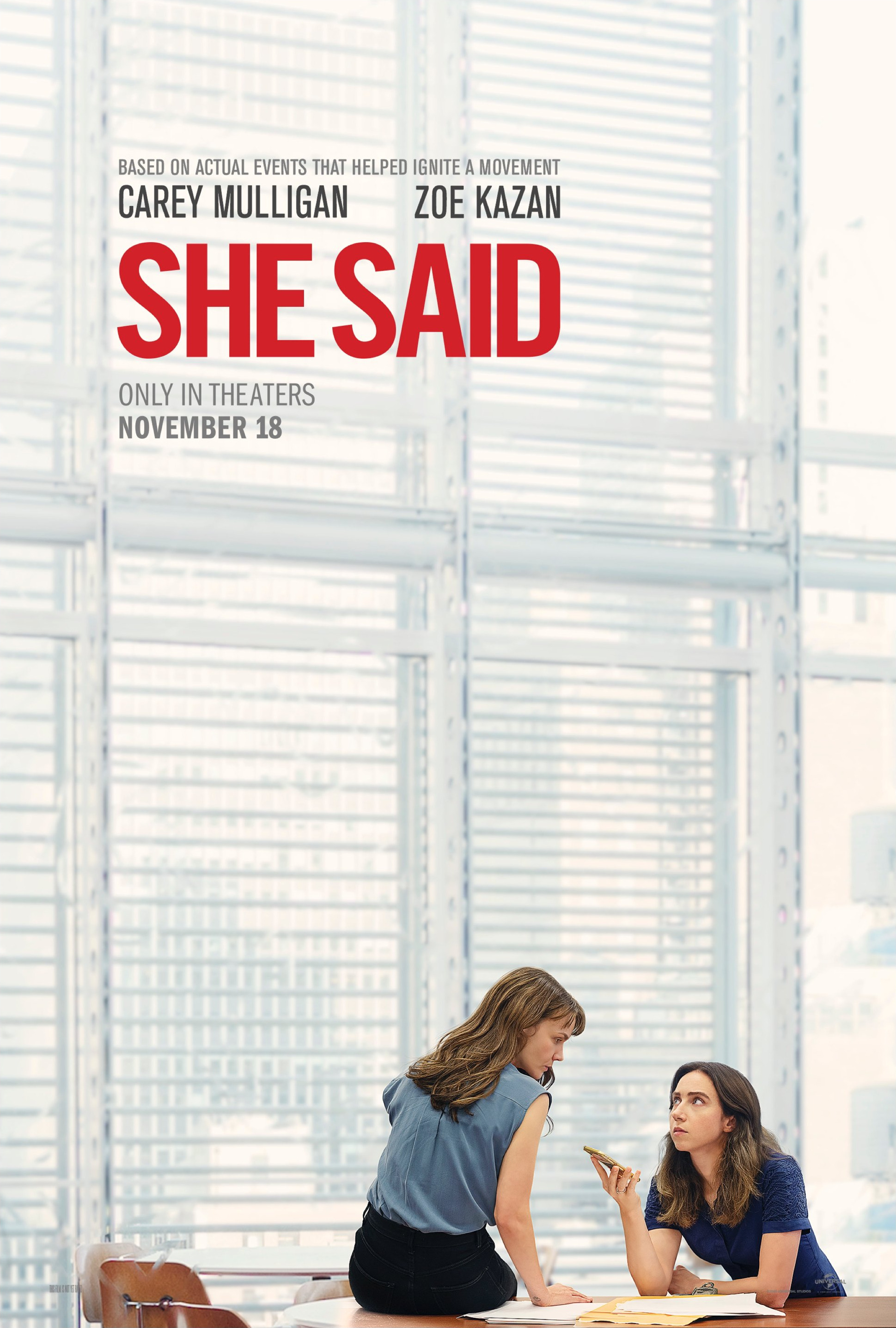
She Said is a standard, but frequently impactful journalism drama


CW: Discussions of sexual assault, rape ahead

2022 has already seen the old-school 2000s romantic-comedy come back to the big screen with films like Ticket to Paradise, while Top Gun: Maverick made movie theaters around the globe seem like they'd been teleported back to 1986. Why not also bring back the journalism drama to the big screen while we're at it? The comeback for the genre that birthed everything from All the President's Men to Spotlight manifests with She Said, which chronicles the true story of how The New York Times cracked the story of Harvey Weinstein's extensive history of being accused of sexual assault, verbal abuse, and rape by countless women.

Our leads for this feature are Jodi Kantor (Zoe Kazan) and Megan Twohey (Carey Mulligan), a pair of reporters who have the kind of conviction you need to chase down difficult stories like the Weinstein saga. The whole affair begins through just Kantor poking around in Weinstein's past, an exercise Twohey is initially dubious over doing given how little impact the allegations against Donald Trump impacted his rise to power. However, they both become enamored with this story as they dig deeper and deeper into Weinstein's past. He's impacted so many lives in such unspeakable ways, to the point that many of the people they contact with either can't or won't speak about it on the record. 

Rebecca Lenkiewicz's screenplay for She Said, adapted both from the New York Times investigation and a book entitled She Said penned by the real Kantor and Twohey, is tackling incredibly heavy material and weaves an appropriately morose tone for such a story. The sheer weight of everything these women have had to live with, not to mention the web of power that has kept Weinstein free from consequences, is certainly felt within the story. The most impactful parts of She Said are cognizant of how overwhelming those forces are, the way they creep into everyday life whether we like it or not.

The instance of this that really stuck in my mind is scene where Kantor's Skype call with her adolescent daughter takes a dark turn when her child asks if a story her mom is investigating involves "rape." It's a word her friends use all the time, to which Kantor tries to delicately explain to the youngster that she shouldn't use it casually. With minimal dialogue and Nicholas Britell's score dropping out, Kazan's performance and the script gracefully depict a mother realizing that her daughter is growing increasingly cognizant of all the horrors in society. She's tried to provide a barrier between her home life and all the unspeakably atrocities beyond her front door. Now, she's received a sudden reminder of how omnipresent the normalization of rape culture is. The term "rape" has even become a go-to term in the world of playground chatter. The intrusion of pushy phone calls or sudden reminders of the past in the everyday lives of people who have accused Weinstein of despicable acts convey a similar power. They too are aware of how the darkest parts of reality can creep up anywhere in your life. 

She Said's script is less effective, unfortunately, in terms of its story structure. There's little uniqueness in how Lenkiewicz executes this story to separate it from other similar journalism and the more perfunctory investigative scenes drag in pacing. Director Maria Schrader and cinematographer Natasha Braier don't help things by realizing the look of She Said in a similarly straightforward fashion. Opportunities to get further into the minds of sexual assault survivors through distinctive pieces of camerawork are eschewed in favor of very basic instances of framing and lighting that rarely fluctuates even when Kantor shifts her investigation over to the United Kingdom. The intimate and dark nature of She Said isn't an excuse for these visual shortcomings given that other movies tackling similarly chilling material, such as The Assistant, managed to excel in their camerawork. You don't need to be an expansive epic to have vibrant or thoughtful visuals.

She Said, ultimately, isn't as challenging or defiant of the status quo as either the journalism or the testimonies that inspired it. Even composer Nicholas Britell is in more reserved mode here. But there's enough emotionally raw material and commendable performances to make it a reasonably engaging watch, particularly whenever the script focuses on harrowing recountings of the experiences of sexual assault survivors. It's in their words that She Said finds its most solid footing and the moments that will last with viewers longest. Beyond that, the feature can be a bit boilerplate, but at least She Said has got actors like Zoe Kazan and Patricia Clarkson around to give it a boost of life. Plus, there's no denying how good it is to see a journalism drama back on the big screen again.


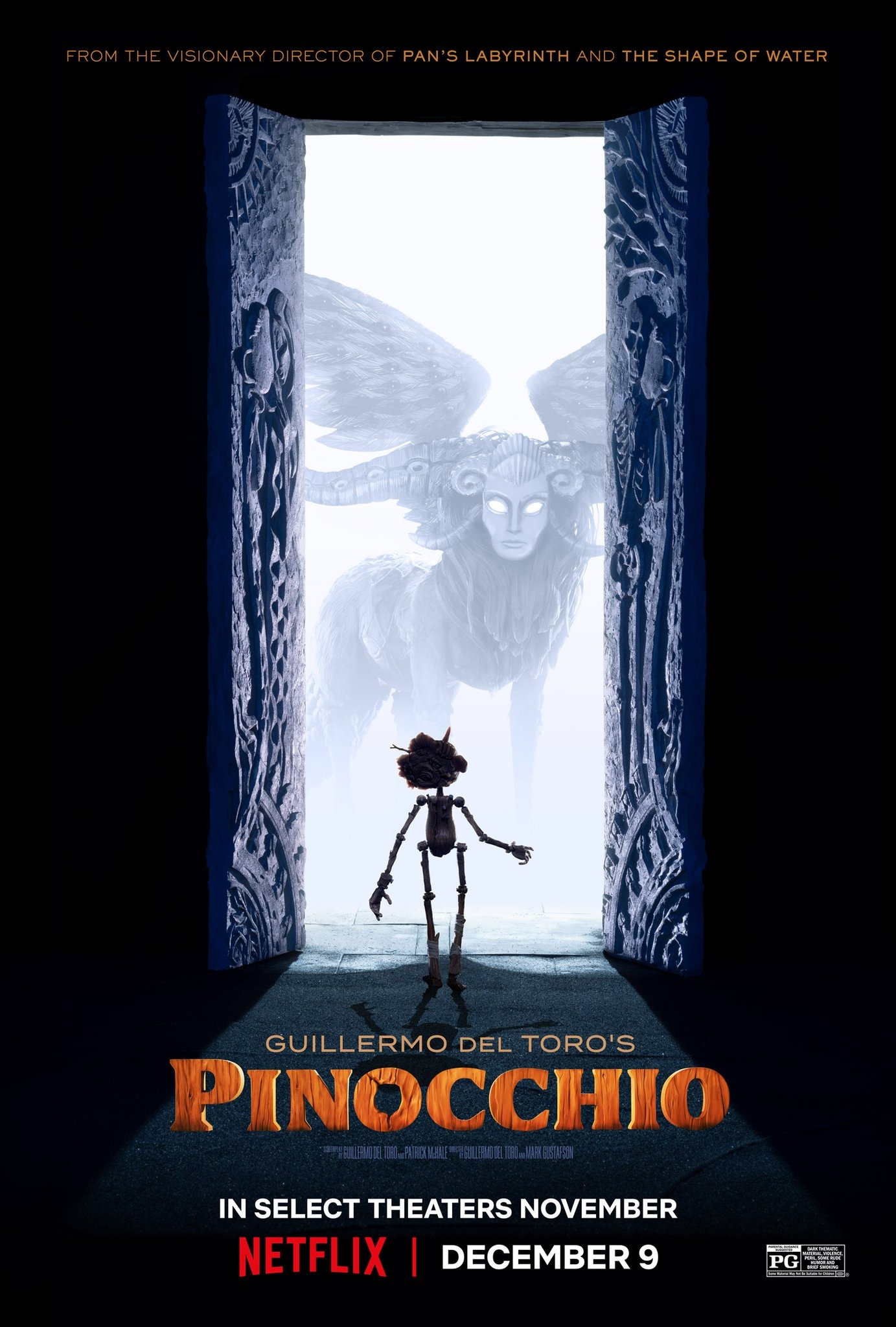
Pinocchio is an incredibly charming lark from Guillermo del Toro


What can you do to make Pinocchio seem new again?

It's a question director Robert Zemeckis couldn't figure out a good answer for in Disney's live-action Pinocchio remake from a few months back. Roberto Benigni's attempt to inhabit the role of Pinocchio in the early 2000s was a misguided folly. Aside from launching an amusing internet meme, modern takes on this wooden boy don't offer much. One might understandably wonder if there's no fuel left in the Pinocchio movie tank, but any old story can feel fresh and new if given the right execution. Just look at how Greta Gerwig injected so much life and vibrancy into Little Women just three years ago. Leave it to Guillermo del Toro to prove that not all 21st-century Pinocchio films are doomed with his stop-motion animated take on this material. Simply titled Pinocchio, this feature is an absolute delight that truly makes one feel like they're discovering the story of this puppet come to life for the very first time.

Many positive reviews of animated features aimed at youngsters emphasize how good it is that these films can also resonate so deeply with adults. With Pinocchio, I was struck by a sense of joy for the kids who end up watching it. How wonderful that they'll get to grow up with a movie that doesn't talk down to them and confronts elements that do play into the lives of adolescents, such as religion, war, or death. Here we have a feature that doesn't just tell kids to be themselves but to always challenge authority. Best of all, it's a telling of Pinocchio that doesn't feel beholden to the past. Pinocchio isn't obsessed with referencing pop culture entities from my childhood, it's here to tell a standalone yarn that can belong to a new generation. What a gift to the youngsters of 2022 and beyond.

Of course, Pinocchio isn't made just for kids in mind. Directors del Toro and Mark Gustafson (not to mention co-screenwriter Patrick McHale) seem to have made this movie primarily for themselves above all else. This is especially reflected in how del Toro has maintained all his primary thematic motifs even when making something that's rated PG, namely a distrustful attitude toward religion, a despisement of social conformity, children navigating an overwhelming world of devious adults, and, of course, an adoration for weird fantasy creatures. Even the use of celebrity voice-overs, a common staple of American animated family movies, reflects more of del Toro's interests than what a focus group might want. 

Many of the folks assembled here are either actors from prior del Toro works or people (like Tilda Swinton) that you can't believe haven't worked with the filmmaker before. It's a superbly-arranged voice cast, with Ewan McGregor being an especially fun choice for Sebastian J. Cricket. His pipes are perfect for providing both some fatherly advice and extremely soothing bursts of narration. It's also quite fun how some of the casting choices seem to have a subversive edge. The casting of Cate Blanchett (who previously appeared in del Toro's Nightmare Alley) as a monkey who almost exclusively communicates in basic primate noises almost feels like a joke making fun of rampant celebrity voice-casting in movies like Sing or the Ice Age sequels. Whether or not that underlying commentary is intentional, putting Blanchett in this kind of role reflects the unique creative impulses at play in this version of Pinocchio.

Of course, what really makes this animated musical sing (no pun intended) is the visuals. Stop-motion animation is always such an impressive medium, all the effort and time that goes into every frame is palpable. The warped and freaky visual sensibilities of del Toro are a great fit for this style of animation, with the instantly tactile nature of stop-motion lending incredibly believable textures and weight to every one of the freaky creatures that populate this story. It's also a nice touch that the animation isn't striving for realism, as seen by how bursts of fire are rendered on-screen, for instance. Pinocchio leans into the innate unreality of stop-motion animation and is all the stronger for it. Simply put, it all looks fantastic and wonderful. If you wanted to just mute the dialogue, you could still have an incredible experience watching Pinocchio just absorbing all the richly-detailed backgrounds and amusing character designs. 

Pinocchio is a tremendous treat and, even better, it doesn't just represent the creative sensibilities of del Toro. Patrick McHale, who co-wrote the film's songs, channels amusing ditties like "Potatoes and Molasses" from his unforgettable miniseries Under the Garden Wall in penning the intentionally simplistic but endlessly charming tunes that populate this story.  Merging that kind of wit with del Toro's empathy for outsiders and an avalanche of glorious stop-motion animation...do you need a roadmap to figure out Pinocchio is something special? A shame Netflix won't be putting this out on the big screen in a more prominent capacity (though at least they ensured this long-in-development feature existed) considering just how stunning this movie looks in a theater. Experiencing Pinocchio in such an environment really makes you appreciate its countless charms.

Monday, November 14, 2022

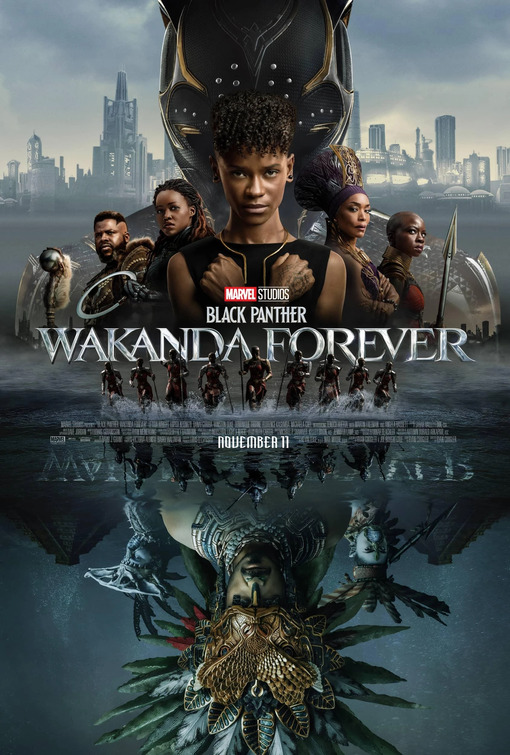
Black Panther: Wakanda Forever is a moving, if crowded, return to Wakanda


The very first line of Black Panther: Wakanda Forever, spoken by Shuri (Letitia Wright) off-screen against a black screen, makes it clear that the real-life demise of Chadwick Boseman will not be dismissed with an offhand line of dialogue or a quick easter egg in the background. It's going to be the crux of Ryan Coogler's fourth directorial effort. Not only that, but that initial line establishes the emotional urgency of what's to come. This isn't necessarily a bleak venture into Wakanda, but it isn't afraid to confront the complexities of loss and the different ways people respond to the process of grief. In other words, bring some tissues if you're like me and have any sort of emotional vulnerability.

Shuri is our primary focus of Black Panther: Wakanda Forever, and her story picks up a year after the loss of her brother T'Challa. She's still walking around in a fog from losing someone so close and personal to her, preferring to toil away in her lab rather than lingering on the memories of T'Challa. Her mom, Ramonda (Angela Bassett), is now in charge of Wakanda and protecting it from all kinds of threats interested in taking on this country now that it's devoid of the Black Panther. One of those challengers is Namor (Tenoch Huerta Mejía), the king of the underwater civilization Talokan. Shuri and Okoye (Danai Gurira) are tasked with a mission that could provide some peace between Wakanda and Talokan while everyone tries to figure out what the future of Wakanda even looks like.

Screenwriters Coogler and Joe Robert Cole have wisely opted to devote long stretches of Wakanda Forever to just intimate conversations, the kind that makes us understand the nuances of these superpowered people and what they want. Wakanda Forever adheres to my favorite kind of superhero storytelling, the kind where the unabashedly silly elements like Namor's winged feet or the sight of people riding orcas like horses into battle are maintained, but there's also an embrace of tangible pathos. A harrowing scene depicting a fraught exchange between Ramonda and Okoye, for instance, is incredibly powerful, particularly due to Bassett's emotionally raw performance. If she was executing this same dialogue in a grounded Broadway play, there'd be no differences from her line deliveries in this movie designed to move Disney Store merchandise. 

Those kinds of performances, and Coogler's willingness to let the low-key scenes just breathe, do wonders for Wakanda Forever's sense of poignancy. It's also a wise idea to give so many of the players in this expansive narrative the thematic connective tissue of coping with grief, particularly Namor and his fascinating backstory or the eventual reveal of where Nakia has been in the Marvel Cinematic Universe since the events of the first Black Panther. There isn't a single size for coping with loss and the various players of Wakanda Forever nicely reflect that while also ensuring there's thematic consistency in the various narrative detours. In other words, it feels like these characters all belong to the same movie...mostly.

The greatest shortcoming in Wakanda Forever is, unfortunately, in that same screenplay, which is ultimately too overstuffed for its own good. Certain supporting players can get lost in the shuffle, but more egregiously is an extraneous subplot involving Everett K. Ross (Martin Freeman) and a character someone at Marvel is more in love with than general moviegoers. Their whole storyline is tedious from top-to-bottom, especially in terms of visuals (why do I care about Ross's conversations in bland government buildings when I could be in an underwater kingdom or the vibrant land of Wakanda?), and since it's entirely detached from the main action, just comes off like a distraction. Given how well the original Black Panther fared at functioning as largely a standalone story in the Marvel Cinematic Universe, it's a shame that Wakanda Forever's pacing gets undercut by a storyline designed to remind audiences of future Marvel adventures. 

While Wakanda Forever isn't as divorced from other Marvel adventures as its predecessor, other superb elements of the original film are as sharp as ever. Ruth E. Carter's costumes still dazzle while Ludwig Göransson's once again knocks his score out of the park. Certain sections of Wakanda Forever opt to eschew dialogue entirely in favor of letting Göransson's compositions carry the day and his music is more than up to the task. Meanwhile, fan-favorite characters from the original Black Panther, especially M'Baku (Winston Duke), are just as entertaining as ever while new player Namor is bound to be an audience favorite. Tenoch Huerta Mejía's performance here has doubtlessly solidified him as a standout heartthrob in 2022 cinema, his screen presence and commanding aura are just spectacular.

But what works best in Wakanda Forever are the elements working within the shadow of the tragic loss of Chadwick Boseman. His presence looms large over Wakanda Forever, particularly in an opening funeral scene that kickstarts the feature on an appropriately melancholy note. Coogler and the cast manage to nail the ensuing emotional beats without coming off as either manipulative or exploitative of a tragedy. It's especially nice that their approach evokes a line spoken by T'Challa in his first appearance in Captain America: Civil War, regarding how "death is not the end, it's more of a stepping off point." Chadwick Boseman is absent from Wakanda Forever, but it's fascinating and touching to see the small ways his character's legacy reverberates throughout this motion picture.

I wish the entire film was less crowded (read: less Martin Freeman) to allow that kind of emotional exploration more room to breathe or at least make Wakanda Forever's runtime more manageable. But enough works here to make Wakanda Forever follow in the footsteps of Creed and Black Panther (albeit without matching the overall quality of either film) as a mainstream Ryan Coogler film that tackles pathos as effectively as it approaches thrills.

Saturday, November 12, 2022

The emotionally rich Aftersun is one of 2022's greatest movies (SPOILERS)


SPOILERS AHEAD

Aftersun begins with a seemingly normal status quo. A dad, Calum (Paul Mescal) is taking his daughter, Sophie (Frankie Corio), to a hotel resort in Turkey for a little summertime vacation before school starts up again. Only a little into the movie do you start to notice a few things askew. Namely, our adult protagonist has a cast…where did he get that injury? The hotel is also quietly shoddy, with lots of intrusive construction and the only activities for kids being some racing arcade game. The script never pokes you in the ribs that something is awry here, but it beckons you to gaze deeper into the frame. From there, you also begin to notice the little details about the humans on-screen.

Like a camcorder adjusting its image after someone presses the zoom-in button, key aspects of Aftersun come into focus with a little bit of time. There's an underlying sadness to seemingly throwaway lines like Calum mentioning "I can't imagine myself at 40" during a scuba trip with Sophie. Meanwhile, initially fun moments like Calum and Sophie throwing bread at a dinnertime entertainer before bolting without paying for their meal initially come off as just frivolous father/daughter bonding...but what does this moment really suggest about Calum? All of these details mean that Aftersun begins with a sense of extensive history between the characters. They’re all deeply entrenched into their behavior patterns, such as Calum still saying “love you” to his ex-wife or Sophie's inclination to read a magazine about women rather than the weighty book her father insists she reads. There’s an enormously lived-in quality to these characters conveyed in such realistically understated means. 

The exploits of these characters become more and more strained as the runtime wears on, with initially joyful if slightly contained interactions giving way to much more troubling evenings. The peak of these problems comes one night when Calum gets intoxicated and opts to go to bed early, leaving Sophie to fend for herself below. Sophie finds tender warmth with other people that night, including a girl who gives her an all-access wristband and a boy she kisses. But not with her father, whom she desperately tries to connect to.

Writer/director Charlotte Wells, in what's shockingly her feature-length directorial debut, often captures these kinds of internal emotions in Aftersun with a dreamlike quality that proves as emotionally insightful as it does visually imaginative. A scene of Calum drunkenly walking around at night at one point depicts this figure against a vast sea of blackness, like he’s stumbled into the void from Under the Skin.  It’s such a striking image, seeing this solitary man alone against an endless and ominous landscape devoid of specific details. Other times, the camera opts for closer, intimate shots, many of which are used to illustrate the point-of-view of our adolescent protagonist. Now 11 years old and eager to look back on her 7-year-old self as “way younger,” she’s often hanging out with teenagers at this resort. These more cramped shots see her lingering on the finer details of these older figures she wants to hang around and reinforce her desire to get closer to this particular social group.

Nowhere does Wells shine more as a visualist than in recurring glimpses of a dance floor that's set against a darkened backdrop and illuminated in brief bursts of light. Initially just a striking visual motif throughout Aftersun, it culminates in a final sequence revealing this to be a place where an adult Sophie is coping with the complicated image she has of her father. This stretch of Aftersun is like the love child of Beau Travail and Mulholland Drive, a nightmarish display of dancing told through quick cuts that reflected the fragmented feelings Sophie has for Calum. It's a mesmerizing feat of filmmaking perfectly accompanied by a hauntingly sparse version of the Queen/David Bowie ditty "Under Pressure." Never before have lyrics like "Why can't we give love one more chance?" taken on such weight.

I was utterly mesmerized by this sequence in Aftersun, but it's not the only part of the movie that impressed me. Far from it. That first reveal of this movie stretching across time in a non-linear fashion, when we cut to an adult Sophie in bed with her wife, that made me gasp out loud. It was just such a bold direction to take this story, it perfectly accentuates the emphasis of memory in the story, and the organically subdued way we're told this is adult Sophie is incredibly impressive. The writing of adolescent Sophie, too, is incredible. Much like with the works from Studio Ghibli, Wells knows how to write kids who sound and act like kids, their imperfections all apparent.

The beautiful suggestion of a larger emotional world between each word work wonders at touching the heart while Wells demonstrates quietly profound tendencies in every aspect of her screenplay. Her level of insight and thought is apparent in even the tiniest details, like the tunes that are always blaring at tourist-friendly events in the Turkey hotel Sophie and Calum are staring at ("Tubthumping" by Chumbawamba is especially perfect, of course, that's what they'd be playing). Her controlled filmmaking is also captured in the performances, which include an outstanding turn from Paul Mescal. Having not seen his show Normal People, I had no real notions of his qualities as an actor beyond the fact that somebody at A24 digs him (Aftersun is one of two Mescal titles the studio is releasing this Fall). 

But good God, he's fantastic here, deftly playing a goofy dad but also realistically hinting at darker, more vulnerable qualities within Calum. It's such a rich performance that I couldn't get out of my brain while Frankie Coiro delivers similarly superb work playing Sophie. She and Pascal are playing such wildly different characters in Aftersun, but they share the quality of handling complexity like a champ.  Watching performances and a movie this good is a gift and I urge you to do yourself a favor and experience it for yourself, especially on a big screen where your full attention can be absorbed by every emotionally captivating detail Charlotte Wells has laced throughout Aftersun.

Wednesday, November 2, 2022

Armageddon Time is a weaker, but often interesting, directorial effort from James Gray


Growing up isn't easy. It's always an awkward experience full of stumbles, misunderstandings, and anxiety. It's an especially bad process when you realize at some point in your life that it doesn't end when you turn 18. Just because you're old enough to enlist in the U.S. military or about to start college doesn't mean you've finished evolving as a human being. We're all always growing and being exposed to further complexities of reality, which is simultaneously a comforting and terrifying thought. Armageddon Time, a quasi-autobiographical period piece from writer/director James Gray, captures a small portion of growing up in the life of Paul Graff (Banks Repeta), a sixth-grader growing up in Queens, New York in 1980.

Graff has a cushy life in some respects, living with PTA mom Esther (Anne Hathaway) and reliable mechanic Irving (Jeremy Strong) in a nice home. He's also got a close bond with his kindly grandfather, Aaron (Anthony Hopkins). But even if he doesn't have to worry about going to bed hungry, Graff's life still has its share of challenges. For one thing, his friendship with Jonny (Jaylin Webb), a young Black kid with a fixation on NASA whose living with his mentally-deteriorating grandmother, has brought Graff a lot of joy. However, their shared rebellious nature means that trouble is never far behind the duo. Eventually, they get into enough trouble to inspire Esther and Irving to send Graff to a fancy prep school. Here, Armageddon Time's lead character becomes even more conscious of all the systemic intolerance around him while constant problems plague Jonny.

Though Gray is gazing back into his past with Armageddon Time, don't expect an easy dive into warm nostalgia from the director of The Immigrant. If nothing else, Armageddon Time is the needle that pokes the balloon that is rampant joyful 1980s nostalgia in American pop culture. 1980 is often depicted as a place where joy is an anomaly, not the norm. Meanwhile, the recurring mentions of Ronald Reagan's impending Presidential election and the presence of two notable famous faces at Paul's prep school hauntingly convey that the problems of this era will only be exacerbated in the future. Just as none of us are ever done growing up, so too does Armageddon Time suggests that America was far from finished with systemic intolerance after 1980.

Gray's morose tone makes this a slightly abnormal autobiographical coming-of-age yarn, with this screenwriter/director accentuating the grimness through depictions of hypocritical behavior in its characters. Paul's grandmother, for instance, will talk at the family dinner table about her experiences with anti-Semitism while also prattling on about how desegregating schools has opened the door to nothing but trouble. Similarly, Irving notes at one point that nobody in Esther's family except for Aaron ever supported him being a mechanic, everybody else among her relatives just wrote Irving off. Simultaneously, Irving also brutally insists that his son give up on his ambitions of being an artist and pursue "a real job." The characters of Armageddon Time can be simultaneously oppressed by societal norms while engaging in dehumanizing acts against other people themselves. This doesn't erase the horrors of antisemitism or the rudeness of dismissing people based on labor-based jobs, it just shows that people can be complicated. Committing to this quality makes the gloomy atmosphere of Armageddon Time feel earned rather than forced.

Other aspects of Armageddon Time's screenplay, though, left me yearning for that kind of depth. Esther, for one, fades into the foreground in the second half of the story after being such a prominent character up to that point. There's an in-universe reason for her being so distant, but putting the pedal to the metal by just sidelining her makes her presence in the entire film feel underdeveloped. Similarly, Jonny's presence in Armageddon Time is erratic. Too often it feels like his role in the story is solely being determined by what Paul needs, rather than making him feel like a kid with his own separate life. A brief glimpse of Paul talking to his grandmother had me wishing we could get more scenes of this character alone, and see what his day-to-day life feels like. The characters in Armageddon Time that feel alive are rich with layers, but unfortunately, it also leaves some players in its story out in the cold.

This is a byproduct of the movie eventually attempting to do just too much, a strange shortcoming since Gray was able to make all the various challenges of Ewa (Marion Cotillard) in his 2014 film The Immigrant feel cohesive and like they belonged to the same movie. It's not a problem to have a protagonist go through multiple types of struggles, it's just that Gray doesn't pull it off quite as well here. Part of the problem is Paul Graff himself, a kid whose often overshadowed by other characters in Armageddon Time like Aaron or Jonny. Whereas Ewa was always the most compelling character on-screen in The Immigrant and could carry your attention through all that movie's twists and turns, Paul is a bit more generically rendered as a character and, as a result, can get lost in the various subplots of Armageddon Time. It's not a good sign about the status of your protagonist when our one in-depth view into Paul's mind, taking place during a museum field trip, results in a segment that feels lifted from a live-action Disney movie from the 1990s more than anything else.

Key pieces of Armageddon Time, namely big swings at pathos in the third act or the score by Christopher Spelman, often feel like the writing of Paul Graff; not bad, just not very distinctive or memorable. Still, though it can't measure up to earlier works by James Gray, Armageddon Time is far from a waste of time. It's still got interesting pieces of insight to offer on American society circa. 1980 while Darius Khondji's cinematography is rife with striking images. There are also plenty of good performances to go around, with Anthony Hopkins standing out most of all as a cuddly and wide grandpa. Leave it to Hopkins to lend the same level of conviction and believability to a guy who buys toy rocketships for his grandson as he did to a cannibal. What range he has!

Growing up isn't easy to do, no matter how old or young you are. There are tons of movies throughout history that have grappled with the difficulties of this process, with several of them turning out to be masterpieces. Armageddon Time falls well short of that distinction, but there are some flashes of brilliance and standout elements here amidst a busy plot and a thinly-defined protagonist. Certainly, you could do worse than watch a movie where Hopkins monologues about the importance of always standing up to racist bullies.

Sunday, October 30, 2022

Till is a deeply human biopic with a mesmerizing lead performance


Mamie Till (Danielle Deadwyler) was insistent to her son, Emmett Till (Jalyn Hall), that he be careful when going down to visit cousins in Money, Mississippi. She wanted to make him aware of the hardships and brutality they hadn't been exposed to on a day-to-day basis living their existence in Chicago. Even with the knowledge that something awful could happen, though, nothing could've prepared her for what happened when Till and his cousins went to a corner store one day on this trip. Till's interactions with a white woman, Carolyn Bryant (Haley Bennett), would lead to a pair of white men coming in the middle of the night, grabbing Emmett Till, and lynching him. Afterward, his body was so mutilated that some coroners had trouble identifying the body. But Mamie Till knew. Just one touch of the corpse and she knew this was her son.

Till is a movie whose plot is set into motion through violence, but it's also about how the desecration of a human life lasts long after a vicious murder. The second of the screenplay, penned by director Chinonye Chukwu as well as Michael Reilly and Keith Beauchamp, is largely focused on an attempt to get a trial going to exact some kind of justice for Till. In the process, we see warped testimonies that not only offer falsehoods about Emmett Tilly's character, but also further demonstrations of how the American justice system fails Black voices. The fact that this is just as true today as it was in 1955 when Emmett Till was murdered means that Till isn't covering unprecedented territory in modern cinema. But the execution of this material still contains some weight, nonetheless.

Much of that power can be chalked up to Chukwu's filmmaking, which is just as vibrant and insightfully human as it was on Clemency. Her affection for intimate shots that linger on human beings processing devastating information, with vivid facial expressions speaking volumes, returns from her 2019 motion picture. That affinity for quieter depictions of grief is what really sells the emotional undercurrent of Till. A scene of Emmet Till's grandmother, Alma (Whoopi Goldberg), sitting on her bed next to Mamie, solely repeating the words "I told him to go down there" quietly is such a devastating and specific portrayal of coping with the aftermath of the unthinkable. Chukwu and cinematographer Bobby Bukowski framing this moment from afar in an unbroken shot is a terrific visual detail that lets the sorrow of this moment sink in.

Similarly, Till's visual palette makes heavy use of bright and vivid colors, a welcome departure from the often drab color choices of other mid-20th-century period pieces. The walls of a building belonging to the NAACP is coated in bright teal while the home of Mamie Till is packed with hues of pink and yellow. Even down in Mississippi, especially in a town exclusively inhabited by Black individuals, brighter colors populate the screen. Not only does this give Till a memorable look, but it also subtly provides a thoughtful depiction of how and where danger can manifest for marginalized people. Emmett Till isn't just in danger in places coated in a grey color-graded hue added in post-production. Even places featuring a shining blue sky or brightly-colored trucks can be home to danger and violence. 

The strong visual sensibilities of Till can't, unfortunately, mitigate some of its weaker elements. Confining this movie to a shorter portion of Mamie and Emmett Till's lives ensures that it doesn't fall into the cradle-to-the-grave problems that plague many biopics, but it still falls prey to some common issues in this genre. More pressingly, Abel Korzeniowski's score often intrudes on the emotions of key scenes. While the camerawork and performances often aim for subtlety, Korzeniowski's compositions make it overtly apparent what we're supposed to be feeling and when. It doesn't help that his work is surprisingly generic-sounding, especially considering his much more distinctive compositions in prior features like A Single Man.

Though not without its shortcomings, Till is another strong drama from director Chinonye Chukwu. Much like her 2019 film Clemency, Till also features a powerhouse lead performance, in this case, a dynamite turn from Danielle Deadwyler. Whether she's reacting to the news of her son's murder through just facial expressions or giving passionate speeches in court, Deadwyler is mesmerizing. Even as Mamie Till becomes more and more involved in activism in the wake of losing Emmett Till, Deadwyler never forgets to convey a tangible sense of humanity in her portrayal of Mamie. It's a stirring performance that, when combined with the smart visual choices of Chukwu, makes Till a much better-than-average American biopic.

Saturday, October 29, 2022

The Inspection excels in its acting and writing


The quietly thoughtful nature of The Inspection is communicated almost right from the start of Elegance Bratton's screenplay (he also directs this quasi-autobiographical yarn). Most films with LGBTQIA+ leads that are heavy on weighty drama depict queer characters existing in total isolation from any larger queer community. Here, though, protagonist Ellis French (Jeremy Pope) is shown encountering openly queer pals on the subway station and sharing a pivotal conversation with a self-described "old queen" in a homeless shelter. Queer lives are everywhere from the start of The Inspection and French is well-aware of both that and his own orientation. Emphasizing this lends a sense of realism and a lived-in quality to The Inspection from frame one and kicks the movie off on the right foot.

From here, French decides to enlist in the Marine Corps, much to the befuddlement of his disapproving and intolerant mother, Inez French (Gabrielle Union). This is 2005, the final years of "Don't Ask, Don't Tell", so French is aiming to keep his head down, not attract much attention, and maybe even avoid being coded as "gay" by his fellow soldiers who would rather die than be queer. Unfortunately, the truth always comes out and it isn't long before his fellow marines, including the incredibly homophobic instructor Leland Laws (Bokeem Woodbine), know the truth. Thus begins a lengthy trial of turmoil for French as he tries to endure in an environment that doesn't want him to exist in the first place.

The Inspection is a harrowing movie with some appropriately uncomfortable scenes to watch, but one of the best facets of its screenplay is something akin to The Lonely Island's "Spring Break Anthem"; a depiction of how queerness is demonized in general society but pronounced depictions of heterosexuality are A-OK. The hypocritical nature of these norms is amusingly rendered in moments like the same soldiers who're terrified of even touching shoulders with French getting into a frothy passion over images of naked women. Bratton frames these double standards as absurdly amusing, but there's also a layer of darkness here. Gays must be quiet on all matters, while the straights can go as loud as they want in their expressions of sexual desires.

It's a theme that intriguingly runs throughout The Inspection while Bratton's screenplay demonstrates further creativity in eschewing a standard character arc for how French and his marine comrades get along. Normally, one would imagine they'd all start as enemies before gradually becoming friends as the movie progresses. Bratton, though, opts to make things more complicated than that. Some enemies become allies, but there's often a "two steps forward, two steps back" approach in how French grows close to people like Laurence Harvey (Raul Castillo). Going this route injects further realism into the proceedings while making one never certain just where French's journey will take him.

Bratton and cinematographer Lachlan Milne's visual sensibilities in The Inspection aren't quite as idiosyncratic as the film's many narrative flourishes. However, the film is never incoherent in terms of its imagery, and its competent camerawork never subdued the great performance scattered throughout the cast. A sequence depicting the interior yearning mind of French does make great use of bright colors, smoke, and dreamlike visuals to make for a vivid dive into this man's mind and an appropriate contrast to the intentionally subdued aesthetic of the rest of the feature. I wouldn't have minded more scenes like that, departures from reality that allow us to center French's desires over just his turmoil, but what we do get suggests Bratton does have some range as a visualist.

The Inspection is overall a strong movie, but even if its script and editing were trash (which they aren't, for the record), it would still be worth the price of admission just to discover Jeremy Pope's talents as an actor. In his first lead role in a motion picture (he's previously been a veteran of the stage and starred in two Ryan Murphy-produced TV shows), Pope is captivating. French is a character who often has to juggle layers of different personalities just to get through the day at this Marine training camp. Handling all of those layers could've resulted in a jumbled performance, but Pope gracefully communicates so many disparate parts of French's psyche even when he's just standing there waiting for orders from a commanding officer. It's a tremendous performance that wrings maximum pathos out of an understated part.

The supporting performances are also great, with Union playing a great subversion of her normal silver screen persona while casting the always compelling and authoritative Woodbine as a military sergeant was a stroke of genius. The Inspection is a feast for those who appreciate good acting and incredibly sharp writing. While it could've stood to have a little more panache in its visuals, The Inspection, as seen by the quietly subversive writing in its opening scenes, is well worth standing up and saluting.

Sunday, October 23, 2022

Triangle of Sadness is a sometimes rocky but always compelling voyage


In talking about why Titanic proved so interesting to moviegoers, writer/director James Cameron has said that he saw the ship as functioning as a microcosm of the world. Viewers could see the lines between classes in modern societies sharper than ever in the context of a ship, while the people who were most impacted first by the ship sinking were also the ones most disadvantaged financially, just as the impoverished are the ones who first experience the devastation of climate change. Filmmaker Ruben Östlund has returned with Triangle of Sadness, another social satire from this director distinguished in his filmography by embracing Cameron's concept of a big ship working as a metaphor for broader society. Within Triangle of Sadness, though, there's a tad more on-screen vomit and excrement compared to the movie where Jack and Rose fell in love.

Split across three sections, Triangle of Sadness is focused on a collection of disgustingly rich people. This includes a young couple Carl (Harris Dickinson), a male model, and his girlfriend Yaya (Charlbi Dean), an influencer, as well as totally separate passengers like Dimitry (Zlatko Burić), a Russian capitalist who built a fertilizer empire. These and other exorbitantly well-off souls are all enjoying a trip on a cruise led by a figure only known as The Captain (Woody Harrelson). Initially, the screenplay is just focused on dark comedy emanating from the entitlement of the guests and their obliviously dismissive treatment of the wait staff on the yacht. Even when they think they're doing a good deed, like forcing the yacht employees to take a dip in the ocean to "relax", the wealthy are just suffocating the voices and wishes of working-class people.

A stormy night kicks off a series of chaotic events that forever change the lives of everyone aboard the ship, though far be it from me to spoil what kind of madness lies in wait. The fun of Triangle of Sadness comes from watching Östlund constantly finding new and unexpectedly bizarre ways to underscore how the various emperors in this film have no clothes. Spoiling the specifics would undercut the entertainment for newcomers, but I can comfortably say that these parts of Triangle of Sadness work because Östlund refuses to engage in half-measures with this screenplay. Just as this screenwriter commits to portraying nearly every character on-screen as thoroughly shallow and despicable, so too does Östlund commit to depicting inescapable mayhem awaiting these figures out on the open seas. 

In the process, Triangle of Sadness paints an accurate portrait of how excessively wicked the upper crust can be while putting them through the wringer in a fashion as heightened as their real-world behavior. Is any of the chaos inflicted on the passengers of this vessel any more ludicrous than the average actions of Elon Musk? Granted, all while this mayhem is occurring, it's hard to escape the nagging feeling that Triangle of Sadness isn't quite as compelling or insightful as a critique of modern capitalism compared to, say, Sorry to Bother You. Focusing a narrative on characters who belong to the bourgeoisie instead of the proletariat while intending your story to critique wealth disparity will always have downsides. Östlund is clearly wanting the viewer to be enraged at the wealthy, but their very presence in the foreground of Triangle of Sadness still contributes to their omnipresence in American pop culture. Something like The Assistant manages to make the horrors of powerful rich people apparent without ever putting them in the frame, by contrast,

Similarly, much like Östlund's last film The Square, Triangle of Sadness can be too excessive for its own good (in this case, a 150-minute runtime could've been trimmed for sure). Does this comedy risk being as opulent as the uber-wealthy characters it intends to critique? On the other hand, perhaps it's necessary for Triangle of Sadness to be so extravagant to provide a mirror to the rampant consumerism and splendor in the real world. I kept flip-flopping between which of these two roads Triangle of Sadness was traveling down and ended up feeling the latter was more true than not. Much like Richard Kelly's Southland Tales, Triangle of Sadness is here to provide a farce whose immense absurdity is needed to capture the mayhem happening far outside the reaches of your local movie theaters. Plus, it's commendable that a movie like this offers so much for the viewer that you can see so many valid interpretations of its ambitions. Many other modern social satires like Don't Look Up wish they had that level of depth.

Triangle of Sadness can't evade all of its shortcomings, but it does prove constantly entertaining and intriguing thanks to the assured direction of Östlund and a cast that's game for whatever this movie throws at them. Dolly de Leon as Abigail is the most impressive member of that stacked roster of performers. Handed the most prominent working-class character in the story, de Leon is also handling the figure in Triangle of Sadness that experiences actual change as the plot progresses. She handles all these finer nuances with ease while also conveying a personality that could still exist in the same universe as the more pampered performances she's surrounded by.

Do you have a strong stomach? Do you like dark absurdist humor? If the answer to either of those questions is "yes," Triangle of Sadness is going to end up being for you. I'm still not sure if it works fully, but it's such an idiosyncratic and compelling creation that kept my mind engaged, especially in a third act that contemplates if the strains of capitalism are so omnipresent that they'll mold our lives even when we're detached from society itself. Also, there are good sight gags based around excessive vomiting. As James Cameron said, a luxury cruise can function nicely as a microcosm of the world. In Triangle of Sadness, it functions as a microcosm of a world on fire from the moment it leaves port.

Monday, October 17, 2022

Empire of Light is a bit dim when it comes to being a cohesive movie

In one of its many scenes that could’ve functioned fine as an ending, Empire of Life contains a scene where movie theater employee Hilary Small (Olivia Coleman) finally watches a film on the big screen in her workplace. As she becomes enraptured by the images on-screen, we cut back to the projectionist's booth, and specifically to close-up shots of various photos of classic movie stars taped to the walls of this area. It’s all shot quite nicely, Trent Reznor and Atticus Ross’s score sounds pretty, and Coleman is incredibly gifted at conveying a character experiencing a life-changing event just through facial expressions. 

Yet, it all means nothing. 

This scene has no point within the screenplay penned by writer/director Sam Mendes. It doesn’t pay off anything substantial on a character level. Worse, it’s detached from Empire of Light’s previous primary focuses of racial tensions in 1980s Britain and mental health issues. Without any way for this sequence to mean something, anything, within the context of the film it occupies, it might as well be an ad for AMC Theaters. Much of Empire of Light is, unfortunately, like this sequence. Handsomely made, competently acted, well aware of the emotional beats it wants to hit, but tragically unsure of how to blend it all into a cohesive whole. 

Small works at a small movie theater off the coast of England in 1981. She keeps to herself, doesn't speak up very often, and lives an overall muted existence. The arrival of Stephen (Micheal Ward) as a new employee at the theater initially doesn't seem to matter much, he's just another co-worker she'll make small talk with. But a romance begins to blossom between the two, with the pair finding so much joy in each other's company. Unfortunately, they each have larger problems to deal with, with Stephen often being targeted by a wave of renewed racism in the country while Small has a troubled past that she's always living in the shadow of.

Empire of Light finds its best footing in its earliest scenes, when it appears this will be a hangout movie about movie theater employees. The throwaway interactions between characters have a tangible quality to them. Plus, it’s hard not to like conversations shared between a distinctly 1980s punk rock lady and an infinitely more reserved middle-aged projectionist. The rapport between Small and Stephen is also at its best as they tiptoe around the possibility that they may be falling in love. No heightened drama to interrupt their camaraderie, just two good actors sharing some solid chemistry. 

But the more big ideas Empire of Light tries to squeeze into its screenplay, the more it begins to wobble and fumble under its weight. Confrontations with racism in the 1980s may be well-meaning, but they’re awkwardly executed and tend to show only intolerance manifesting in extremely pronounced means. Cartoonish caricatures are the only depiction of bigotry here. The times when Empire of Light grinds to a halt to confront this abhorrent behavior, it reduces Stephen to being either a punching bag for bigots or someone gently explaining how racism is still a problem to Small. There’s no problem with trying to confront hot-button issues, but you’ve got to deal with something like racism better and more creatively than Empire of Light.

Empire of Light's inability to go subtle also proves to be a key problem on a narrative front. The cinematography from Roger Deakins, with its subdued color palette and melancholy lighting, and the score from Reznor and Ross belong to a restrained and quiet character piece. But these elements clash against the film's tendency to go loud whenever it wants to be emotional, like Small bashing a sand castle or the police repeatedly knocking on Small's door. Empire of Light bashes you over the head with both what you're supposed to feel and what's happening on-screen. This story wants to touch your heart, but it's too aggressive to ever get close to that. Even worse, it jostles awkwardly from one big plot development to another. It never feels like there are organic transitions between its various themes or characters. This especially becomes apparent in its awkward third act, when it seems like the action is winding down for good only for the story to twist itself into knots to keep going on five or six separate occasions. If I'm thinking about whether or not the credits are about to roll instead of getting invested in the images on-screen, something's gone wrong.

The affinity Mendes has for such pronounced displays of human behavior end up leaving Coleman out to dry. This actor does the best she can with some really clumsy dialogue and ham-fisted expressions of big emotions, but even she cannot turn every lemon of Empire of Light into lemonade. Similarly, kudos to Micheal Ward for emerging as a memorable and charming performer (he gives the best performance here) despite being handed such a thinly-sketched character. There are enough pieces of commendable subtle acting between Coleman and Ward, not to mention solidly-realized cinematography and music, to keep Empire of Light from being a total washout. However, it's still a disappointment, almost crushingly so, that Mendes ended up delivering such a disposable drama despite having so many talented artists at his disposal. The magic of movies that entranced Small so much in that superfluous Empire of Light scene is shockingly absent from the film she headlines.

Saturday, October 15, 2022

Tár hits a high note with its thoughtful and captivating filmmaking

Toward the end of Tár, titular protagonist Lydia Tár (Cate Blanchett) is watching an ancient video of a conductor talking about what makes the best music so enchanting. As this artist speaks, he notes that you don't need to know about measures or bars or any other complex terminology to understand a great piece of music. When it stirs an emotion you can't describe in your soul, that's what's most important about a composition. It reminded me of an interview with Gullermo del Toro, where this director observed how, whenever he watches a movie for the first time, he doesn't get wrapped up in the analytical details about why it's working. He just lets the images wash over him.

There are countless ways I could break down why Tár, the first film from writer/director Todd Field in 16 years, is as exceptional as it is. But taking a cue from both this maestro and del Toro, the best way to express how I knew Tár was something special isn't through lofty language lifted from the world of film academia. It's simply in recalling how Tár gripped me. My eyeballs were captivated by the screen from start to finish. Its 157-minute runtime flew right by as its ominous atmosphere proved intoxicating. Capture my full interest this much and, just from that alone, you're doing incredibly right. Those veteran artists were right: sometimes it's the simplest surface-level takeaways that really let you know you've experienced something remarkable.

Tár opens with Lydia Tár being interviewed in a packed lecture hall. Her interviewer is listing off all her various accomplishments as a conductor, including the fact that she's an EGOT winner and how she's worked with so many iconic artists over the years. These opening moments establish Lydia Tár as a force to be reckoned with and also the public persona that the rest of the movie is all about subverting. Think of this glowing description of her past as a block of marble that Field's screenplay subsequently begins to chisel to form somebody...a lot more complex. And dangerous. 

Lydia Tár spends her days teaching classes and conducting new compositions in Berlin, Germany, a place she also calls home with her wife, Sharon Goodnow (Nina Hoss), and her adopted daughter, Petra (Mila Bogojevic). Tár is hard at work setting up and conducting a performance that she's been dying to do for so long. Many of the tasks needed to organize her vision are delegated to her dutiful if quietly resigned assistant, Francesa Letini (Noémie Merlant). There's already a lot to juggle here, but things get even more contentious when something from Tár's past re-emerges. She initially shrugs it off as nothing, but the echoes of her past quickly become harder and harder to ignore. 

Field and cinematographer Florian Hoffmeister realize the world of Tár largely through sustained wide shots, with close-ups of characters being used as minimally as possible. They also regularly deep focus to excellent effect throughout Tár, an ingenious way of suggesting how interconnected everybody is in this movie. Even when Tár is in her head, absorbed with just herself, shots utilizing deep focus make it clear that other people, like her wife, a new protege, or her assistant, are still around, even if they're in another room. On the flip side of the coin, vast images where Tár is the only figure in the shot are incredibly haunting, it's like she's stuck in an endless void even if she's just lingering in an empty apartment. No matter what tone it's trying to strike, the images of Tár magnificently communicate how its lead character is just one piece of the larger puzzle of life.

Also impressive is a recurring visual motif, echoing similar shots in Sean Baker's Red Rocket, where some of the cruelest or disturbing behavior exhibited by Tár is filtered through a more intimate shot of the person she's closest to. Putting the focus on Goodnow or Letini in these moments makes the consequences of her behavior so much more apparent. It's a great maneuver to ensure that the emphasis of the camera is on the impact of Tár's actions rather than just wallowing in debauchery. There's also a clinical nature to how Field and Hoffmeister frame the world of Tár, a quality matched by the production design which tends to lather the world of Tár in very subdued and "serious" colors. It took me almost the entire movie to realize, but the lavish home of Tár, with its grey coloring and sparse walls, reminded me of nothing more than an interior environment from Crimes of the Future. Going this route adds an eerie quality to a place that should feel cozy, with that uneasy aura only becoming more and more inescapable as the story progresses.

Visually, Tár is a marvel, the kind of movie that begs to be viewed on the big screen. More than any big-budget explosion-laden blockbuster this year, Tár is a perfect distillation of why the theatrical experience is so incredible. Being confined to a darkened room, with your vision and mind only focused on the gigantic screen in front of you, the intensity of Tár becomes extra apparent while its titular lead seems particularly imposing when she's towering above you. As a cherry on top, the finer details of the sound design, namely the perfect use of surround sound to accentuate Tár's growing sense of paranoia, are best experienced in a movie theater auditorium rather than on an iPhone.

But wherever you watch it, whether in theaters or its home video release, the anxiety-inducing pleasures of Tár are bound to enchant, including Cate Blanchett in the lead performance. After nearly 25 years of turning in consistently incredible work, one would think Blanchett might be, understandably, struggling to surprise us anymore. Tár, though, delivers an artist who still delivers the totally unexpected. Blanchett is magnificent here, with the quiet nature of the filmmaking allowing her to flex her muscles as a physical performer and to pack in so much authoritative personality into her dialogue. Whether she's portraying her character as being cool under pressure or growing increasingly frazzled as the challenges around her pile up, Blanchett is transfixing. Hoss and Merlant are also delivering remarkable work here with their supporting Tár performances. Anyone who can go toe-to-toe with a great Blanchett performance deserves lots of recognition! 

For the sake of keeping this review spoiler-free (many of the captivating joys of Tár come from watching everything unfold at the moment), I'll refrain from diving into some of my favorite aspects of Tár, including the way it manages to be so insightful in its relevant social commentary without coming across like it's chasing fresh headlines or buzzy news topics. Even without being able to outline all its virtues, though, Tár is a tremendously well-crafted piece of filmmaking brought to life with an incredible amount of conviction from all involved but especially writer/director Todd Field. You could spend hours breaking down all the intricate details that make Tár so superb, but, as that conductor and del Toro remind us, the way it kept me enraptured is enough of a testament to this movie's quality.

Thursday, October 13, 2022

Halloween Ends SPOILER THOUGHTS

MASSIVE SPOILERS FOR HALLOWEEN ENDS ARE BELOW! READ ON AT YOUR DISCRETION!

Halloween Ends sends the Halloween saga out on an unfocused whimper


"Maybe it's time to let the old ways die." - Jackson Maine (Bradley Cooper), A Star is Born

I love how horror films can combine gruesome violence with weighty themes.

This is nothing new for the genre and ties into what horror storytelling has been able to accomplish for centuries across multiple mediums. Throughout the years, films ranging from Psycho to Jennifer's Body to Train to Busan have given viewers as much food for thought as they have grisly deaths. This lengthy and impressive history reflects how the struggles of David Gordon Green's Halloween movies to properly fuse introspection and violence is not because it's impossible to make a slasher movie with brains. It's just that these features have been extremely clumsy in trying to merge these elements. This trend is alive and well in Halloween Ends, which aims to conclude the entire Halloween franchise. It wants to be the Toy Story 3 of Halloween movies but merely ends up being this saga's equivalent to Star Wars: The Rise of Skywalker.

In one of many baffling storytelling turns in Halloween Ends, screenwriters Paul Brad Logan, Chris Bernier, Danny McBride, and David Gordon Green focus a large portion of this conclusion to the Halloween saga on the newly-introduced character Corey Cunningham (Rohan Campbell). This teenager is the sole focus of the movie's prologue, where we learn about a deeply traumatic event that has transformed Cunningham's life forever. From there, we flash forward to October 2022, four years after the events of Halloween Kills. Michael Myers has been AWOL during that time while Laurie Strode (Jamie Lee Curtis) has bought a house, started living with her granddaughter, Allyson (Andi Matichak) and even begun writing a book. Things seem to be improving in her life...but this is Haddonfield, Illinois. Nothing stays calm for long. Just as Allyson and Corey begin to spark up a romance, Myers begins to emerge from hiding. 

The character of Corey Cunningham isn't the only brand-new thing Halloween Ends adds to the world established by its two direct predecessors. There's a strange tonal whiplash in Halloween Ends that I just don't remember being around in either the 2018 Halloween or Halloween Kills. There were comedic moments in both (and some deaths in the latter film were meant to be darkly comic) but the awkward comedy has really been ratcheted up here. This includes broad archetypes like Cunningham's cartoonishly abrasive mom or Allyson's boss at the hospital where she works at. Part of the chills of the very first Halloween in 1978 came from seeing a figure of pure evil like The Shape just lingering around in what was discernibly the real world. The oversized characters and strange comedic asides of Halloween Ends, though, ensure that everyone is now as detached from reality as Michael Myers.

On a writing level, Halloween Ends also suffers from awkward transitions to new character beats or locations. The screenplay knows where it wants to go or what mayhem it wants to incur, but it rarely finds an organic way of getting there. Allyson and Corey's romantic life is especially clumsy in this regard. Neither of the two seems to know each other before their first meeting in Halloween Ends yet they're planning to run away together by the third act. There's never enough chemistry between the two performers or even just on-screen entertainment to justify how rushed their relationship is. Plus, it can't help but feel disappointing that Allyson's presence in the Halloween saga culminates in her relationship with a boy. Could we not find something more interesting for her to do? Shifting so much of the first and second acts onto the intimate interactions between these two had the added "benefit" of highlighting truly awkward dialogue related to the lingering trauma of these characters. No boogeyman popping out of a closet is as spine-tingling as the idea of these lines being deemed acceptable for a big-screen release.

There are plenty of gripes to be had with the narrative structure in Halloween Ends while the film's visual elements leave much to be desired. Extremely awkward editing by Tim Alverson disrupts even throwaway moments, like Allyson calling out to a distraught Corey to watch out for an incoming truck. But those details, admittedly, aren't why people are coming to Halloween Kills. The deaths and the scares are the primary attraction for most moviegoers and understandably so. In these departments, there's also not much to write home about. The first half of the film is largely focused on building up the Allyson and Corey relationship, so there aren't even many attempts at spooking the viewer. When the inevitable Halloween night rampage on Haddonfield starts, we do get two memorably gruesome death scenes. The other slayings, though, are boilerplate, and Green struggles to maintain suspense as all the carnage unfolds.

Worst of all, Halloween Ends, like Halloween Kills, sidelines Laurie Strode for most of its runtime. The focus largely shifts to Cunningham instead, an utterly bizarre choice. Unlike that earlier sequel, at least Ends gives Strode plenty to do in the finale and there's no denying that it's fun to see Jamie Lee Curtis shooting guns and taking names. But even these surface-level pleasures are disrupted by a screenplay that just can't stop overstuffing its narrative. Exactly like The Rise of Skywalker, Halloween Ends keeps tossing out big twists and turns at the viewer but never gives those developments room to breathe. With neither fun slayings nor interesting observations on coping with long-term trauma to offer, Halloween Ends proves to be pretty unengaging. Countless horror films of the past have combined nasty deaths with weighty themes, which just makes the problems of Halloween Ends even more painful to process.

Tuesday, October 11, 2022

The Banshees of Inisherin brilliantly contemplates the conflict-driven nature of humanity


All throughout writer/director Martin McDonagh's The Banshees of Inisherin, the Irish Civil War rages on in the background. Both the audience and the film's characters never see this battle up close. Cannon fire is heard, explosions can be seen in the far-off distance, and a police chief even talks about traveling there to view an execution. But we don't see it first-hand. The distance allows the Irish Civil War to function as an extension of a concept that fascinates The Banshees of Inisherin: the constant conflict between human beings. No matter what the circumstances of the world are, we're always at each other's throats. That police chief's uncertainty over who is even being executed and by whom shows that humans often love conflict just for the sake of it, we don't even need to know the details about the warring sides.

This eternal staple of human behavior is reflected through the dynamic between the two lead characters of The Banshees of Inisherin. All the ceaseless turmoil captured by the cameras imbues the proceedings with unshakeable melancholy, but also plenty of memorable dark comedy. In order words, this is vintage work from writer/director Martin McDonagh.

On the fictional Irish island of Inisherin in 1923, there's not a ton to do. You tend to your animals, you drink, you make some friends. It's no wonder, then, that Pádraic Súilleabháin (Colin Farrell) holds his longstanding friendship with Colm Doherty (Brendan Gleeson) so close to his heart. As The Banshees of Inisherin begins, though, something's gone wrong. Doherty no longer wants to speak to Súilleabháin. This musician has come to realize that life is too short to be wasting time making small talk with Súilleabháin. Doherty just wants to end things there, bury this friendship in the past right away. But Súilleabháin isn't about to give up Doherty without a fight. So begins a conflict that keeps escalating in severity, all over one fellow not wanting to share a pint with a certain guy anymore.

It's no surprse that The Banshees of Inisherin's origins date back to it being initially conceived as a stage production (though, given how it had a slightly different title and what sound like major plot differences, it's unclear how much of this movie is taken from its initial incarnation). Often the movie echoes something like Waiting for Godot, a play where the scope is minimal but the contemplations on the nature of humanity are dense. The Banshees of Inisherin has a lot for viewers to chew on, but its surface-level pleasures are many. In particular, McDonagh's gifts for working with actors is alive and well here and helps draw out a murderer's row of memorable performances.

This includes Colin Farrell in a leading turn that made me realize that this man's gift is in playing pathetic people. I don't mean that as a commentary on Farrell as a person (he seems nice in interviews!) He's just got a real gift for portraying people that Jack Lemmon used to specialize in, a man whose sad-sack nature radiates off the screen, their gait alone conveying an overwhelming aura of woe. The Lobster, In Bruges, even his interpretation of Oswalt Cobbleplot/The Penguin in The Batman, these are all people who are all so awkward and brazenly imperfect. His gifts for portraying such characters continues with Pádraic Súilleabháin, a man who starts The Banshees of Inisherin with head hung low before getting even more mournful from there. Farrell lends such a captivating quality to his performance here and it's especially impressive how many layers he can reveal in Súilleabháin. This guy can seem intimidating, sympathetic, detestable, and so much more all in the same movie. This is why Farrell is so good at playing these kinds of characters. He makes them pathetic with a capital-P, but also nuanced enough to seem like believable humans.

Farrell's accompanied by a splendid array of deeply lived-in supporting performances, with Brendan Gleeson adding another exceptional turn to his long list of unforgettable credits as Colm Doherty. Kerry Condon might just steal the show, though, as Siobhán Súilleabháin. In her most high-profile film role to date, Condon provides a fascinating anchor to the two male leads. She's a woman who seems to have a little more worldly wisdom who can still be vulnerable and not have all the answers. Condon finds such fascinatingly subtle ways to convey the multi-layered nature of her character while her execution of a very important piece of dialogue to Doherty is handily one of the best line deliveries of 2022.

These actors exist within gorgeous-looking Irish landscapes so well-realized through McDonagh's director and the cinematography by Ben Davis. Taking place in a time before electricity was common for rural Ireland residents, Davis makes fantastic use of natural light even in interior environments. Nighttime scenes are always cogent thanks to being tinged in bursts of beautiful streaks of light from candles or the shimmering moon. Visually, The Banshees of Inisherin looks terrific and its strong handle on its camerawork enhances the humor of its finest visual gags. If one ever needs proof that comedies require excellent camerawork just like any other genre, here it is.

All of these top-notch performances and compelling imagery are tied around a story that masterfully bobs and weaves between dark comedy and an inescapable melancholy woe. McDonagh's screenplay is especially good at the seemingly simple but tricky-to-execute feat of constantly keeping you guessing on how things will escalate next. The stakes of The Banshees of Inisherin keep getting taken to the next level, but not in a way that sacrifices its emotional intimacy. These developments feel organic, a natural way to show the lengths people will go to keep conflict brewing. Plus, these breakthroughs in the narrative are always accompanied by intimate moments that allow these characters from 100 years ago to feel like real breathing humans.

In the wrong hands, Pádraic Súilleabháin could've been insufferable, which would mean that all the escalating chaos in his feud with Doherty wouldn't be interesting to watch. But McDonagh's script gives Súilleabháin people and donkeys to care about, we get to gaze at him in quiet moments bonding with the most important creatures in his life. These tenders scenes are where The Banshees of Inisherin's heart is on display, while its darkest moments are where the grimmest tendencies of humanity come out to play. 

Human beings are more than the conflicts that define them...but, as that constantly raging Irish Civil War indicates, conflict is still such a massive part of our lives. Even when there aren't cannons firing, human beings still find ways to feel seething hatred towards one another. That old saying of "laugh through the pain" is so true of The Banshees of Inisherin. This movie keeps a steady stream of dark laughs flowing even as it recognizes darker aspects of human nature. It's often brutal. It's sometimes hysterical. It's The Banshees of Inisherin, one of the year's best movies.

Thursday, October 6, 2022

Javier Bardem can only liven up Lyle Lyle Crocodile so much

If Disney wants to focus on Marvel movies and live-action remakes when it comes to big-screen features, then I guess other studios will have to step up with the generic live-action kid's movies. Somebody needs to deliver on this genre and Sony/Columbia has taken a stab at doing their best impression of a 1990s Disney film with Lyle, Lyle, Crocodile. With this adaptation of the Bernard Weber children's book of the same name, audiences get two pastiches for the price of one as Lyle, Lyle, Crocodile is also an attempt to ride Paddington's coattails. The result of all that imitating is something painless, but also oddly oblivious to the best parts of the movies it's mimicking.

Lyle (Shawn Mendes) is a saltwater crocodile with an incredible talent: he can sing! Down-on-his-luck showman Hector P. Valenti (Javier Bardem) is captivated by this critter and see's endless possibilities for fame and fortune with Lyle. Unfortunately, Lyle has a mean case of stage fright and his inability to perform in front of people sends Valenti into enormous debt. While this wannabe superstar is paying off that money, Lyle stumbles into the lives of the Primm family, nervous son Josh (Winslow Fegley), wistful mom Katie (Constance Wu), and nebulously-defined dad Joseph (Scott McNairy). Lyle might be just what this family needs to overcome their individual problems...if they all don't catch the ire of neighbor Mr. Grumps (Brett Gelman) first, that is.

The best parts of Lyle, Lyle, Crocodile show screenwriter Will Davies, and directors Will Speck and Josh Gordon demonstrating a willingness to embrace the silliness and fantasticalness that comes with any children's book. Valenti is the best example of this. Being a guy who acts like he's Willy Wonka when he's really more Troy McClure, Valenti is an oversized personality who wouldn't exist in the real-world but feels perfect for the target demo of children's literature. I was also relieved to find that Mr. Grumps is just allowed to be a cartoonish villain, they don't even make self-deprecating jokes about his name. No need for a new prolonged origin story to explain why he's so cantankerous, he just functions like a classical pronounced children's book baddie.

Unfortunately, Lyle, Lyle, Crocodile doesn't immerse itself fully into the fantastical qualities ingrained into the best children's books. Instead, most of the runtime is dedicated to run-of-the-mill kid's movie hallmarks executed with little panache. It's like Speck and Gordon's inexperience in the world of kid-friendly entertainment (their biggest directorial gigs before this were a pair of Jason Bateman vehicles, The Switch, and Office Christmas Party) inspired them to make sure they touched base on every narrative standards in the genre. Even an epilogue set in a courtroom echoes the preposterous climax of Air Bud.

Lyle, Lyle, Crocodile is rarely bad and it's never painful, but it's also quite rudimentary. It hits the beats it thinks audiences want it to hit without ever having the courage to try something new. This is especially apparent in the various musical numbers penned by Benj Pasek and Justin Paul. The duo's tunes have always sounded more like pop ditties on the radio than classical musical numbers and that's especially apparent when their lyrics are being sung by Shawn Mendes. Even a tune called "Rip up the Recipe," which attempts to channel the Sherman Brothers in smuggling in life lessons into a "whimsical" package, feels more mechanical than naturally fun despite a game performance from Constance Wu. These kinds of lackluster tunes might be the thing that really keeps Lyle, Lyle, Crocodile from resonating with kids. What youngster is going to turn off We Don't Talk About Bruno to jam out to these generic numbers?

The movie as a whole offers so little to chew on that I found myself mostly amusing myself over small but notable shortcomings in the screenplay. In the third act, for instance, Josh specifically blames his dad for making him so paranoid about the world. But we never saw Joseph behaving like that to his son? It was the mom who was established at the beginning as being worried about her child! What a weird inconsistency in the script, I hope somebody got fired for that blunder. Similarly on a visual level, a scene at the end where Lyle interacts with a pack of other more feral and non-singing crocodiles reinforces what a bad idea it was to design Lyle to just be a semi-realistic looking crocodile. It's hard to tell him apart from his antagonistic brethren! Rather than embrace a fun and distinctive design for Lyle, this movie opted to go the boring route of quasi-realism.

Parents who get dragged to Lyle, Lyle, Crocodile won't find anything disastrous here, save for the clumsy choreography and camerawork during the amusingly small-scale musical numbers (I guess this is what musicals shot during COVID look like?) Compared to Alvin and the Chipmunks, Lyle practically looks like Willy Wonka and the Chocolate Factory. But saving for an endearingly committed Javier Bardem performance, there's also not much here to recommend. It's all so apparently going through the motions to remind you of vastly superior movies (like Paddington) you could be watching instead. Lyle, Lyle, Crocodile, simply put, is like a film generated by one of Netflix's A.I. programs to evoke live-action 1990s Disney movies.

Postscript: Why is Ego Nwodim credited in the main cast in the opening credits despite appearing in only two small sections of the movie and having barely any lines? What a waste! I bet she could have brought some extra laughs to the proceedings. 

Monday, October 3, 2022

The laughs are quite enjoyable in the flawed rom-com Bros


In many ways, Bros looks like the future of mainstream movies. As its marketing has proudly trumpeted, this is one of the first major studio releases to be an LGBTQIA+ romantic comedy while its cast is almost entirely comprised of openly queer performers. I won't lie, considering how often American R-rated comedies (even ones produced as late as five years ago) have prided themselves on transphobic humor, seeing scenes in Bro inhabited by multiple trans characters with varying personalities made my heart smile. Unfortunately, Bros is held back by all too familiar faults in the world of modern comedies, namely poor pacing and flat camerawork. The more things change in terms of on-screen representation, the more comedies produced by Judd Apatow stay the same when it comes to filmmaking.

Bobby Lieber (Billy Eichner) is a podcaster and newly-appointed curator for the forthcoming National LGBTQ+ History Museum. While the protagonist of Bros has a lot to juggle in his life, one thing he isn't handling right now is a committed romantic relationship. Bobby is content to just be single...but then he meets Aaron (Luke Macfarlane). This meathead is just the kind of guy Bobby may occasionally ogle, but can never imagine dating. But then the two start spending more time with each other and, wouldn't you know it, the two begin to hit it off. Both men are hesitant to jump into a prolonged relationship, especially since they're each dealing with so much in their jobs (Bobby has to get $5 million for the museum, while Aaron is stuck in a depressing gig handling dead people's estates) but as they grow closer and closer, Bobby and Aaron may have to do the most daunting thing of all: be vulnerable with and devoted to one another.

Bros fits neatly into the pantheon of R-rated comedies produced by Judd Apatow, most notably a plotline that begins with a heavy emphasis on raunchy material before a third act that's as infatuated with sentimental romanticism as any Nancy Meyers movie. Unfortunately, Bros also carries over fatal flaws from prior projects either produced by Apatow or influenced by his style. Namely, the script for Bros can feel like it's being driven by spur-of-the-moment improvisation, with a lack of dedication to a pre-established cohesive script leading to a bloated runtime. Similarly, the directing and cinematography here isn't anything to write home about, with only two or three gags in the entire runtime getting boosted by a shape visual sensibility. Otherwise, flat renderings of conversations relying heavily on medium shots are the name of the game here.

More exclusive to Bros in terms of faults here is some of Bobby's dialogue. In a New York Times interview about her sitcom Abbott Elementary, Quinta Brunson noted that her goal for the show was to make sure it didn't just sound like people's Twitter feed getting repeated back at them. Unfortunately, that's what some of Bobby's lines about The Hangover, gay cowboys being played by straight actors, and other topics related to queer representation sound like and it gets a bit repetitive. It's extra strange to type this out as a complaint since I agreed with everything Bobby was saying! But what I might nod along to in an academic essay or an editorial column is a bit clumsy to hear spoken aloud as dialogue in a movie. Cinema is a visual medium, and finding a way to reflect the history of queer persecution in striking visual means (like how the ending montage of Bamboozled races through decades of dehumanization of Black people in movies) could've communicated these urgent ideas in more of an engaging manner.

It's a pity this didactic dialogue keeps creeping into Billy Eichner's performance since the actor is otherwise a very solid leading man to anchor the proceedings. His commitment to playing Bobby as a stand-off-ish loner who gradually finds himself won over by a hunky meathead is one of the best parts of Bros. The script (penned by Eichner and Stoller) makes all kinds of meta-references to classic romantic comedies, namely You've Got Mail, but this isn't a cruel mockery of the genre. Eichner inhabits a familiar but sturdy archetype in this genre well and gets you invested in his journey. The familiar but undeniably pleasing third-act wouldn't work as well as it does if you didn't care about Bobby and that investment largely comes about because of Eichner.

Just as pleasing as Eichner's lead performance is the undeniable fact that Bros accomplishes the most important thing of any comedy: it's funny. It'd be cool if the gags came from more sources than just dialogue (like through visual means), but at least the dialogue-heavy laughs here do tickle your funny bone. Especially amusing are the various interactions between Bobby and the fellow curators at the LGBTQ+ museum, which are full of hysterical chaos. Performers like Ts Madison, Jim Rash, and Eve Lindley, among others, get tons of chances to shine in these sequences with the pronounced and unique personalities they've been handed. Cameo appearences from the likes of Bowen Yang and Harvey Fierstein also ensure that some of the most throwaway characters in Bros still manage to make you giggle. Plus, who is going to complain about getting more Harvey Fierstein?!?

Bros is held back by being the next great romantic-comedy by some ham-fisted dialogue and less-polished production details (how does a score composed by Marc Shaiman sound this generic?) I yearn for the day if it ever comes when big-screen comedies can have great cinematography and lots of production value again. Until then, though, Bros still succeeds in delivering plenty of jokes, with many of them coming from a cast stacked with talent. There's also a welcome amount of heart, with the latter element especially apparent in a great finale. We may not be dealing with the next The Shop Around the Corner or The Big Sick in terms of great rom-coms, but Bros still serves as a solid entry in this genre. Plus, giving me the chance to be in a theater and just laugh with strangers again, that's gotta count for something.