
compared to the first, claustrophobic Alien movie. Terminator 2: Judgement Day turned an evil cyborg into a little boy’s hero. It’s doubtful that anyone imagined an Avatar follow-up would focus so heavily on space whales. Heck, even his directorial debut Piranha II: The Spawning ensured audiences saw soaring piranha on screen for the first time.
Avatar: Fire and Ash is a deviation from Cameron’s other follow-ups in its inescapable familiarity. Rather than channeling the strengths of Judgement Day and Aliens, Cameron's given the Avatar saga its own Star Trek Into Darkness/Jurassic World Dominion/Ghostbusters: Frozen Empire. Callbacks and rehashes of prior action sequences abound. Pandora is now a planet with a “been there/done that” feeling devoid of pulpy excitement.
Neteyam was dead: to begin with. Jake Sully's (Sam Worthington) eldest child perished at the end of Avatar: The Way of Water. That loss informs much of Fire and Ash. Sully and wife Neytiri (Zoe Saldana) have taken to stuffing down their feelings, with the latter character stewing in anti-human hatred. Lo'ak (Britain Dalton), who now narrates these movies instead of his father, struggles with guilt over feeling that he caused Neteyam's passing. Adolescent Kiri (Sigourney Weaver) continues percieving herself as a Pandora outcast. Human youngster Spider (Jake Champion) yearns to be more like the Na'vi he loves so much. The youngest Sully kid, Tuk (Trinity Jo-Li Bliss), also exists.
Go-to Avatar baddie Quaritch (Stephen Lang) is still out there in his Avatar body hankering for some revenge against Jake Sully. He's not the only enemy out there for this installment, though. Varang (Oona Chaplin) and her fire-fixated Na'vi people are vicious warriors bent on spreading their flame across every inch of Pandora. An unlikely union forms between Quaritch and Varang over their shared hatred for Sully. The Sully’s are a powerful family. But can they stand firm against these villainous forces and lingering sadness over Neteyam’s demise?
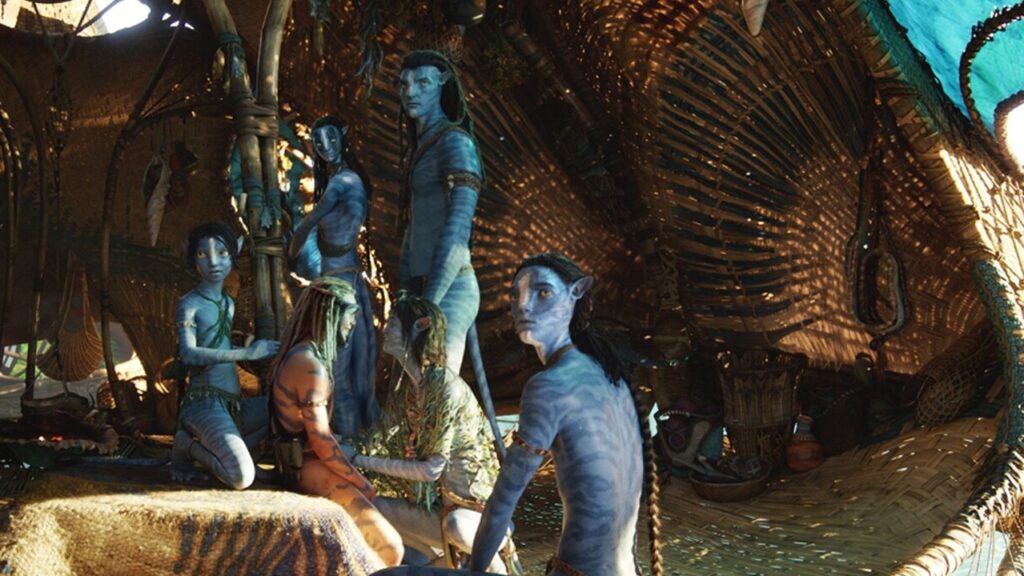
Midway through Fire and Ash, Sully and Spider scramble around a manmade Pandora city/compound. Their surroundings are indistinguishable grey backdrops radiating sterility. That certainly fits the aesthetic of the greedy human characters. However, the only other major new domain explored here is the drably colored, lava-decimated desert Varang and her people call home. Screenwriters Cameron, Rick Jaffa, and Amanda Silver don't dazzle the eyes with these new tableaus. All the luscious possibilities of an alien planet result in forgettable spaces littered with dim hues.
Such imagery reflects how Fire and Ash is the mopiest Avatar adventure yet. Teenage characters point gun muzzles at the bottom of their faces while in distress. Immense screentime centers on Jake and Neytiri contemplating whether or not they should kill Spider. Cameron, Jaffa, and Silver also focus several sequences on domestic squabbles between various Sully family members. These only reinforce that intimate dialogue has never been Cameron’s strongest suit. Plus, Worthington and Champion are not actors you entrust with material evoking Who’s Afraid of Virginia Woolf? or Of Mice and Men.
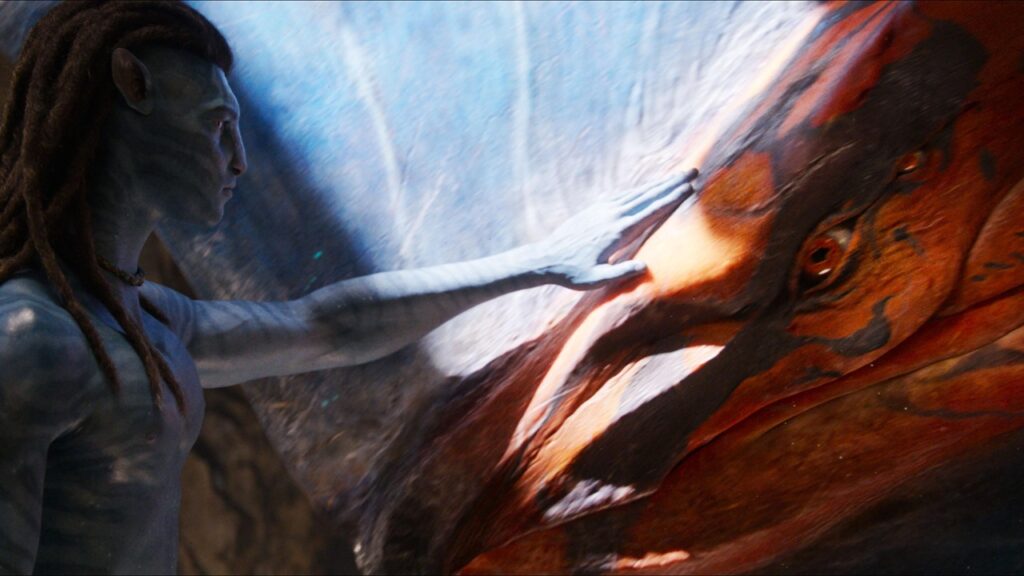
Going darker isn’t inherently a bad thing, especially given the loss informing The Way of Water’s ending. However, Fire and Ash’s execution of that tone is extremely uninvolving. Adding insult to injury, all this morose material just leads to Cameron remixing memorable moments from the prior two Avatar movies. The orange-colored Great Leonopteryx from the first Avatar returns in this film's third act. That stretch of the story also features a near beat-for-beat remake of Jake Sully uniting the various Pandora clans in the inaugural Avatar feature.
A climactic sea-set battle simply rehashes The Way of Water’s conclusion. The only difference is that this barrage of aquatic warfare largely occurs in eclipse-induced darkness, further accentuating Fire and Ash’s diluted color palette. Even the musical leitmotifs dropped throughout Fire and Ash’s finale feel like Cameron checking off the boxes for what a requisite Avatar climax “must” provide. The epitome of this rampant familiarity is in the dearth of new critters. The Way of Water’s aquatic Na’vi brought with them countless space whales and cosmic underwater creatures to dazzle the senses. Varang and her cohorts, meanwhile, just ride slightly more menacing-looking Banshees. Why couldn’t they have nifty iguanas and flamingos to ride into battle?
This third Avatar entry certainly overwhelms audiences with eye candy, but so much of its drably colored or too evocative of Pandora’s past. The movie’s high points center around something distinctly new: Varang and Quaritch’s unexpected bond. Just look at a scene where Varang forces Quaritch into a drug trip. The trippy colors and woozy camerawork finally shake up the visual status quo of this franchise. Fire and Ash truly comes alive when these villains are getting chummy or sneaking off for some outer space boning.
Unfortunately, the unexpected is frustratingly scarce in Avatar: Fire and Ash. Familiar faults even materialize through the return of Cameron’s dreadful deployment of High Frame Rate imagery from The Way of Water. Typical movies are projected at 24 frames per second. In premium format (IMAX, Dolby Vision, Cinemark XD, etc.) Fire and Ash screenings, random moments are suddenly projected in 48 frames per second before returning to the default 24 fps format. This isn’t like certain IMAX movies giving viewers lengthy sequences in one aspect ratio and then shifting back after a few minutes. Fire and Ash hops back-and-forth between frame rates constantly.
This process hasn’t gotten any better since The Way of Water three years ago. High Frame Rate doesn’t immerse viewers into Pandora’s world. Instead, the 48 fps moments trap the Sully clan in motion smoothing hell. The 24 fps segments following these sped-up images, meanwhile, take on an immediately discernible janky appearance. A gigantic blockbuster on a massive movie theater screen shouldn’t look like it’s buffering. Cameron’s deployment of these varying frame rats indicates no precision or thoughtfulness. It’s just deployed so randomly that it kept forcing me out of the movie. All that money spent on visual effects work ruined by hideous High Frame Rate projection. What a staggering folly.
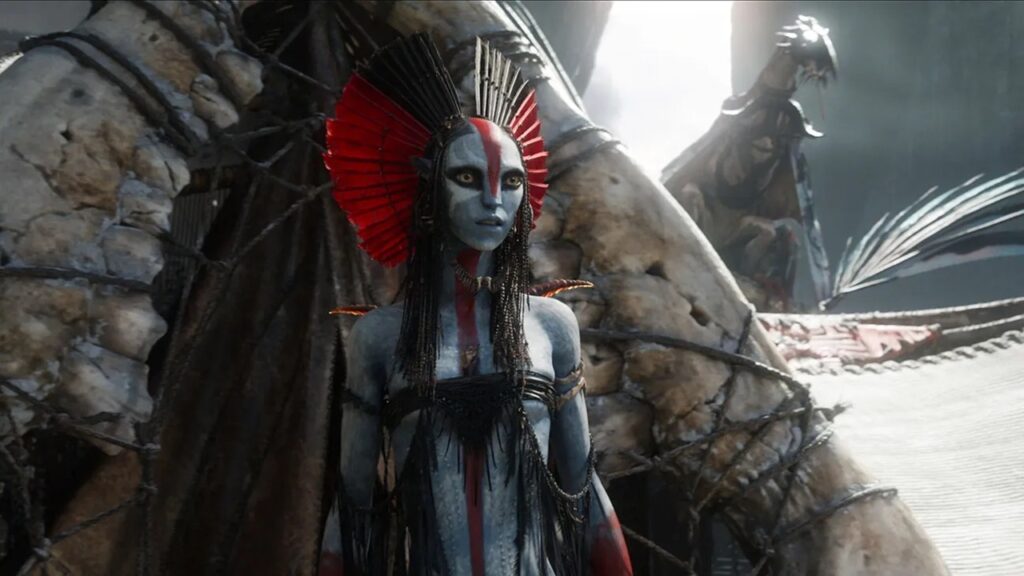
Fire and Ash pairs up these visual defects with eyeroll-worthy dialogue like “well, this is awkward” and tremendously familiar narrative beats like reducing Neytiri to a damsel-in-distress for much of the finale. These overwhelming problems are so distracting it’s hard to appreciate the elements that do work. Sigourney Weaver as Kiri, for instance, continues being sublime. An early set piece of the Sully family traveling through the sky with Pandora’s “Wind Traders”, meanwhile, is the one Fire and Ash set piece exuding tangible beauty. This planet’s various underwater critters remain utterly delightful, particularly Avatar franchise MVP Payakan. Some adorable alien otters (which I don’t remember seeing in The Way of Water) are incredibly cute.
What good are fleetingly seen cuddly animals, though, if the movie they inhabit is so unengaging? Whether it’s drastically overestimating how engrossing Spider is as a character, the weird racial politics (God knows the Avatar movies have always struggled in this field), or the drab color scheme, Fire and Ash is a barrage of tedious creative missteps. "Sometimes your whole life boils down to one insane move," Jake Sully once intoned. How ironic, then, that he’d eventually headline a movie playing it so safe. With this sequel, the Avatar saga gets trapped in a cesspool of callbacks from which only flickers of creativity can escape.

No comments:
Post a Comment